SBC Summit Rio: The Realities Behind VLT Expansion

Brazil.- March o7, 2026 www.zonadeazar.com Experts discussed the role of VLTs, omnichannel retailing and regulation as public policy.
At the SBC Summit Rio 2026, industry leaders analysed the challenges and opportunities of VLT exploitation, the development of the omnichannel model and the role of state regulation in market consolidation.
The panel included Lucinéia Souza, Legal and Compliance Director at Lema Group; Hazenclever Lopes Cançado, President of Loterj; Éverton Sales, Director of Operations at LOTESE; and was moderated by Fernanda Meirelles, partner in the Media and Gaming area at FAS Advogados. The participation of the four executives is included in the official agenda of the event.

During the conference, one of the main themes was the need to understand that the operation of VLTs (Video Lottery Terminals) is not limited to the installation of terminals, but requires a comprehensive structure comprising governance, compliance, payment security, oversight and technological infrastructure.
In this regard, Lucinéia Souza pointed out that the physical environment and the online environment do not operate under the same logic, explaining that the physical channel requires local control, traceability and a specific operational architecture to ensure legal certainty and social trust.
The executive also highlighted that, in models already implemented, the connection between physical terminals and central systems allows for real-time auditable operation. As she explained, this type of integration enables the use of the same wallet so that users can begin their experience at a physical point and then continue it digitally, thus consolidating an omnichannel strategy.
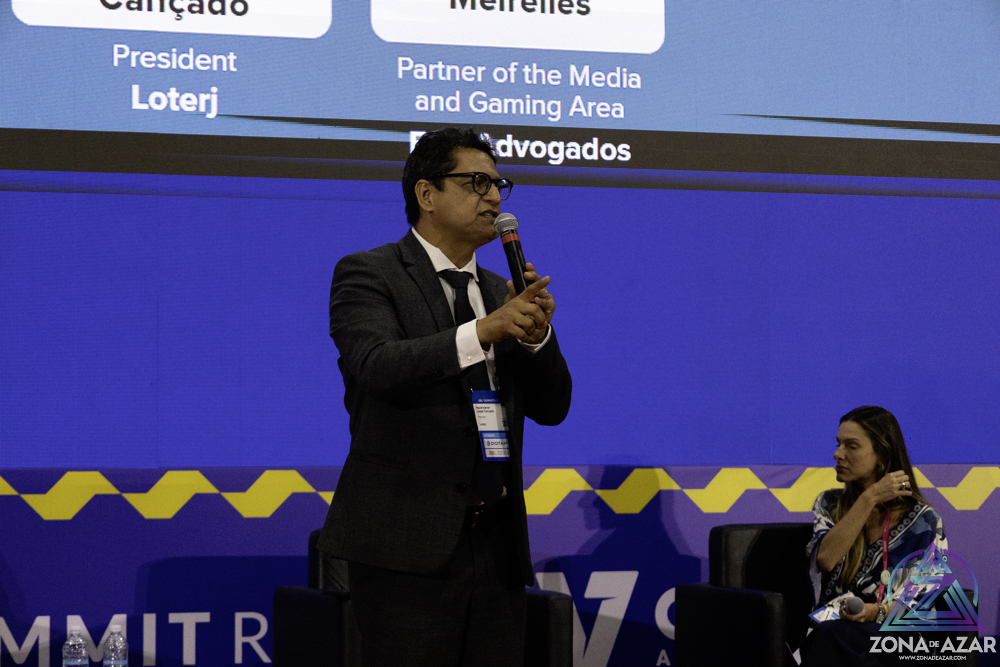
For his part, Hazenclever Lopes Cançado argued that the debate on VLTs should not be reduced to technical or revenue issues. In his presentation, he defended the idea that the lottery system and regulated gambling should be understood as a public policy, with an impact on job creation, tourism, inclusion, and the financing of social actions.
He also argued that the development of this market could help retain in Brazil part of the spending of players who currently travel to other countries to gamble in casinos and entertainment venues.
In one of the most forceful interventions of the panel, the president of Loterj insisted that the public discussion on gambling cannot be trapped in moralism, but must focus on the legality, regulation and economic and social impact of the activity.
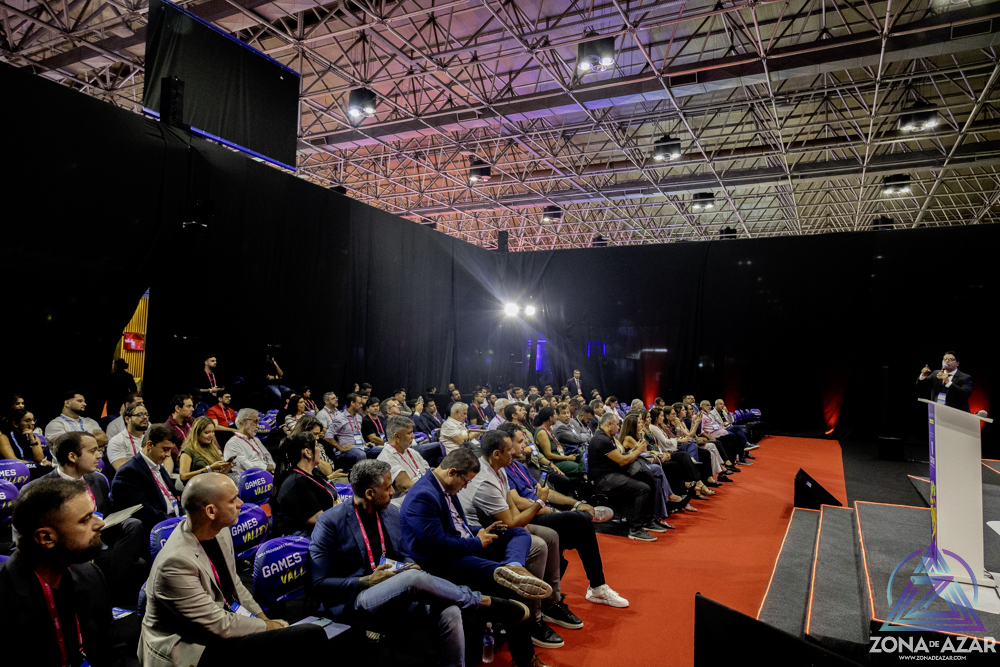
In turn, Éverton Sales contributed an operational perspective and explained that the implementation of VLTs made it possible to identify a user profile that is different from that of the online channel. He pointed out that the physical channel’s audience tends to be more mature, with different consumption habits and a closer relationship with the point of sale.
For Sales, this characteristic makes VLTs a relevant tool for bringing new entertainment technologies to segments of the population that do not currently participate actively in the digital ecosystem, but which are part of the historical tradition of betting and lotteries in Brazil.
The LOTESE executive also noted that the in-person experience offers something that online cannot replicate with the same intensity: direct contact with the bettor, which allows for real-time measurement of product receptivity, commercial impact, and user experience value.
Another highlight of the panel was the consensus that compliance should be part of the initial design of the model, rather than a subsequent correction.

As explained by Lucinéia Souza, a minimum structure of governance and integrity allows risks to be reduced from the outset and provides operators, regulators and suppliers with a common basis for adapting the operation as it evolves.
Towards the end, the panel left a clear conclusion: the development of the land-based VLT market in Brazil should not be understood as a simple expansion of gaming terminals, but as the construction of a hybrid model where technology, regulation, user experience and public policy converge.
Edited by @pererarte www.zonadeazar.com
