BiS SiGMA South America: Physical or Digital, the Sector Debates a Convergent Model
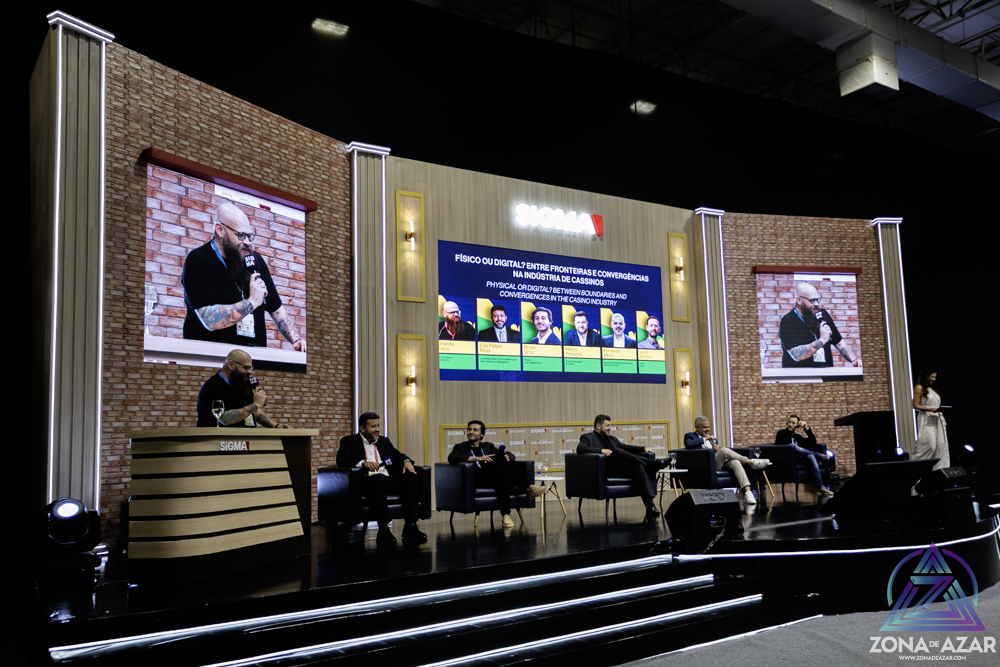
Brazil.- April 10, 2026 www.zonadeazar.com Against a backdrop of rapid transformation, the gaming industry faces a key question: will the future be physical or digital? This was the central theme of the conference ‘Physical or digital? Between boundaries and convergence in the casino industry’, a forum that brought together leading figures from the sector to analyse trends, challenges and opportunities in an increasingly hybrid market.
The panel was moderated by Leonardo Benites, Founder of Cassinos, who led a dynamic discussion alongside prominent industry executives: Bryan Ortiz, Director of Zitro Digital Brazil; Mario Pequeño, from Amusnet; Fernando Mora, representative of Sportradar; Luiz Felipe Maia; and Jordi Sendra, CEO of Alea.
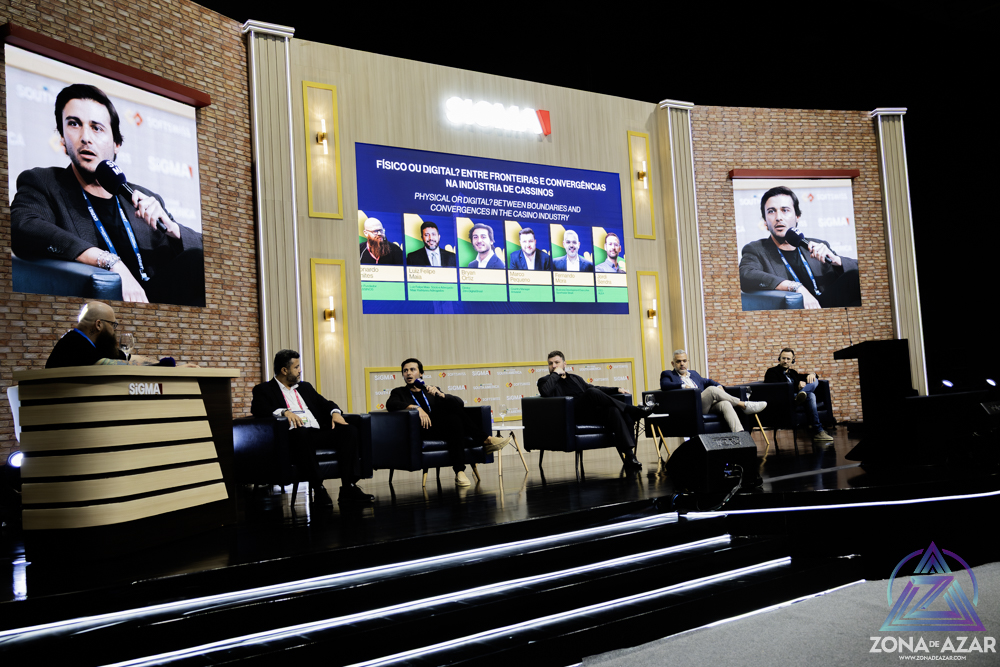
Throughout the session, participants agreed that the future of the sector does not lie in choosing between the physical and the digital, but in finding efficient ways to integrate both environments.
One of the main themes of the debate was the advancement of the omnichannel model, understood as the convergence between the in-person and digital experiences. In this regard, Bryan Ortiz emphasised that the growth of online gaming does not replace the physical sector, but rather complements it. As he explained, technology already allows for the creation of more connected ecosystems, with greater traceability, better verification processes and less scope for fraud, although he cautioned that the major challenge remains regulatory.
Along the same lines, the Brazilian legislative landscape was analysed, along with the potential impact of future judicial and parliamentary decisions on the development of land-based gaming in the country. During the discussion, it was noted that Brazil finds itself in a unique situation, having first moved to regulate the digital environment and only subsequently begun to debate the viability of the land-based sector. For the panellists, this process presents difficulties, but also a unique opportunity to design a more modern, transparent and sustainable framework.
Another key point was the potential of sports bars, immersive venues and physical spaces designed to capitalise on the Brazilian public’s strong sporting culture. Fernando Mora pointed out that, although Brazil does not have as strong a tradition of sports bars as the United States, there is a deeply rooted custom of gathering in bars to watch sport, which could facilitate the adoption of in-person offerings linked to sports betting. He also highlighted that the online world has already created active communities around various sports, something that could boost the migration towards shared experiences in physical spaces.
The conversation also focused on the use of data and CRM strategies to connect both worlds. The speakers agreed that information obtained in the digital environment can become a key tool for attracting users to physical venues, whether through promotions, benefits or partnerships between online operators and physical establishments. On this point, it was emphasised that the intelligent use of data could become one of the major competitive advantages of the future.
For his part, Mario Pequeño focused on adapting content to the profile of the Brazilian player. He explained that, beyond the aesthetics or theming of the games, what is truly important will be understanding what kind of experience the local user is seeking.
In an increasingly saturated market, he argued that having a good product is not enough: it will be necessary to combine creativity, positioning and visibility strategies to stand out in a highly competitive ecosystem.
Finally, Jordi Sendra offered an international perspective on the transition from online to land-based. As he explained, unlike the traditional path — from the physical casino to the digital realm — when an online operator seeks to expand into the physical world, it faces a completely different set of dynamics. In this regard, he recommended relying on specialised third parties and, above all, understanding that the player’s experience changes radically in each environment, from the atmosphere to user behaviour.
In conclusion, the panel left a clear message: the dichotomy between physical and digital is no longer sufficient to describe the sector’s current state. The gaming industry is moving towards a model of convergence, where technology, regulation, data and the user experience will be key elements in shaping the market’s next chapter.
Edited by @pererarte www.zonadeazar.com

