BiS SiGMA 2026: VLTs, Regulation and Security at Center of Debate
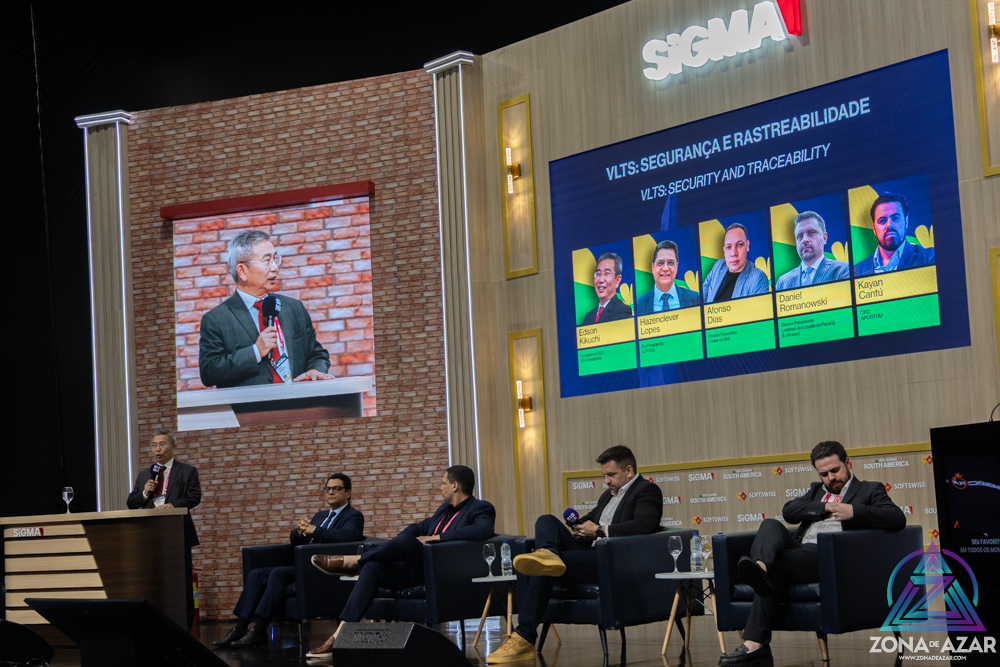
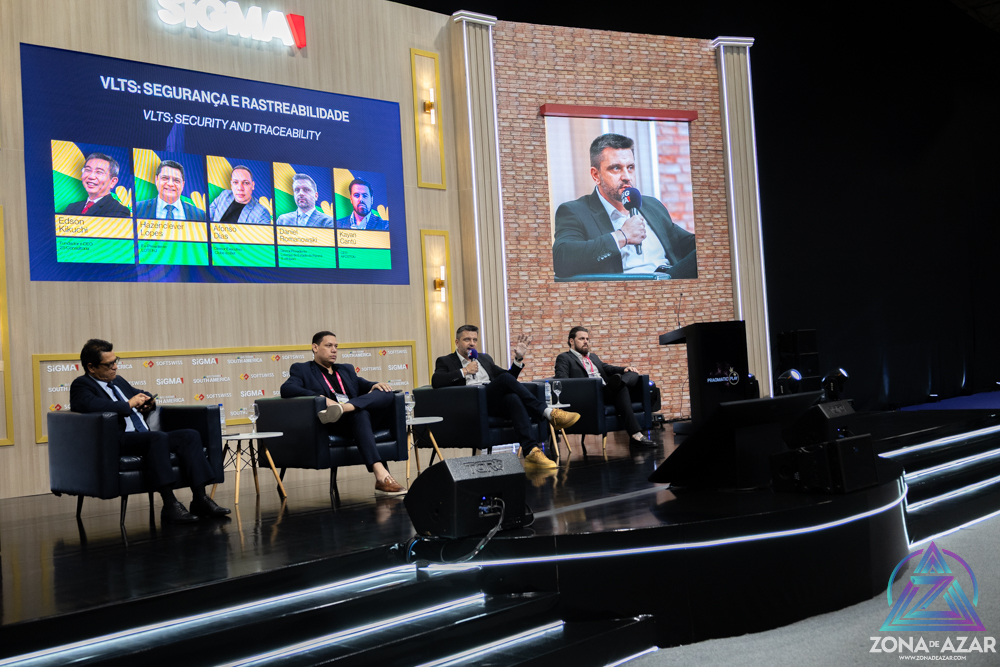
Brazil.- April 14, 2026 www.zonadeazar.com As part of BiS SiGMA 2026, one of the most influential international gatherings in the gaming industry, the panel discussion “VLTs: Security and Traceability” took place, moderated by Edson Kikuchi, an executive with over five decades of experience in consultancy, marketing and strategic management.
The panel brought together leading figures from the sector: Hazenclever Lopes, former President of Loterj, the Rio de Janeiro Lottery; Alonso Dias, Executive Director of Clube do Bet; Daniel Romanowski, CEO of Lottopar, the Paraná State Lottery; and Kayan Cantú, CEO of Apostou.

An evolving market: from a regulatory vacuum to international models
During the opening, Kikuchi highlighted the event’s growth and its consolidation as a global benchmark, in parallel with the evolution of the Brazilian gaming market. He emphasised that the path towards regulation has been complex and still requires progress, particularly regarding the implementation of VLTs at state level.
From a regulatory perspective, Romanowski explained that one of the main challenges was the lack of local precedents:
“We were starting from scratch,” he stated, noting that the model adopted by Paraná was built on international best practices, particularly from the United States and Europe.
The official also stressed that the key lies in creating robust regulatory frameworks that provide predictability and legal certainty, an essential condition for attracting investment from major global operators.
Operation and compliance: the technical challenge of the new market
From the private sector, Kayan Cantú shared his company’s expansion experience, which in just a year and a half went from zero to 40 operational venues and over 300 employees.
“The Brazilian market had no local benchmark, so we had to adapt and learn in real time,” he explained, highlighting the importance of regulatory support.
For his part, Alonso Dias emphasised the technical complexity of the regulation:
“When we received the requirements, we realised that the investment was not just in infrastructure, but in equipment, compliance and technology,” he noted.
Dias explained that the VLT system allows for full traceability: user identification (KYC), control of the origin of funds, continuous monitoring and real-time auditing, which guarantees secure and transparent operations.
Security and institutional cooperation: the foundation of the model
One of the central themes of the panel was security. Romanowski explained that the Paraná model prioritises full digitalisation to minimise risks such as money laundering, including by avoiding the use of cash.
He also highlighted coordination with key bodies such as law enforcement agencies, public prosecutors’ offices and financial oversight bodies, which enabled the creation of a robust oversight system.
“Ongoing dialogue with other institutions was essential to understanding their needs and ensuring a reliable ecosystem,” he explained.
Economic impact: an industry that generates employment and development
The panellists agreed that the VLT ecosystem has a significant economic impact. From equipment manufacturing to software development and venue operation, the industry generates direct and indirect employment and promotes technological innovation.
Cantú highlighted that the sector’s growth also entails the expansion of an entire production chain, whilst Dias emphasised the potential of regulated gaming as a driver of tourism and commercial development.
Hasenclever Lopes: “The real battle is against illegality”

The most striking moment of the panel came with the contribution from Hasenclever Lopes, who delivered a strong political and institutional message regarding the sector’s role.
Lopes was emphatic in dismissing any rivalry between states and stressed that all regulators are working towards the same goal: to consolidate a legal and transparent market.
“There is no competition between us. The real battle is against organised crime, tax evasion and corruption,” he stated.
In a speech imbued with a personal tone, he recalled the challenges faced during his tenure at the helm of Loterj and defended the need to make difficult decisions to build a robust system:
“Doing the right thing is often the hardest, the loneliest path, but it is the only way forward,” he maintained.
Furthermore, he highlighted the value of regulated gambling as a tool for social transformation:
“The greatest prize is not the money, but the social impact we generate with the funds raised,” he said.
Lopes also highlighted that behind every VLT there are jobs, families and opportunities, and urged operators to take an active role in building a more inclusive future:
“It is not just about operating games, but about being agents of transformation in society.”
Breaking the stigma: the sector’s cultural challenge
In closing, Romanowski raised another major challenge: changing the social perception of gaming in Brazil.
“In other countries it is a normalised activity, but here there is still a stigma associated with illegality,” he explained.
In this regard, he called for greater unity between operators and regulators to consolidate an ethical, transparent industry aligned with international standards.
A future under construction
The panel made it clear that the development of VLTs in Brazil will depend on three fundamental pillars: robust regulation, technology applied to security, and cooperation among all sector stakeholders.
With a market still expanding, the final message was clear: the legal gaming industry in Brazil represents not only an economic opportunity, but also a key tool for social development and the fight against illegality.
Edited by @pererarte www.zonadeazar.com

