Game Changers: Tetiana Lukiianiuk, Head of Account Management at Amigo Gaming
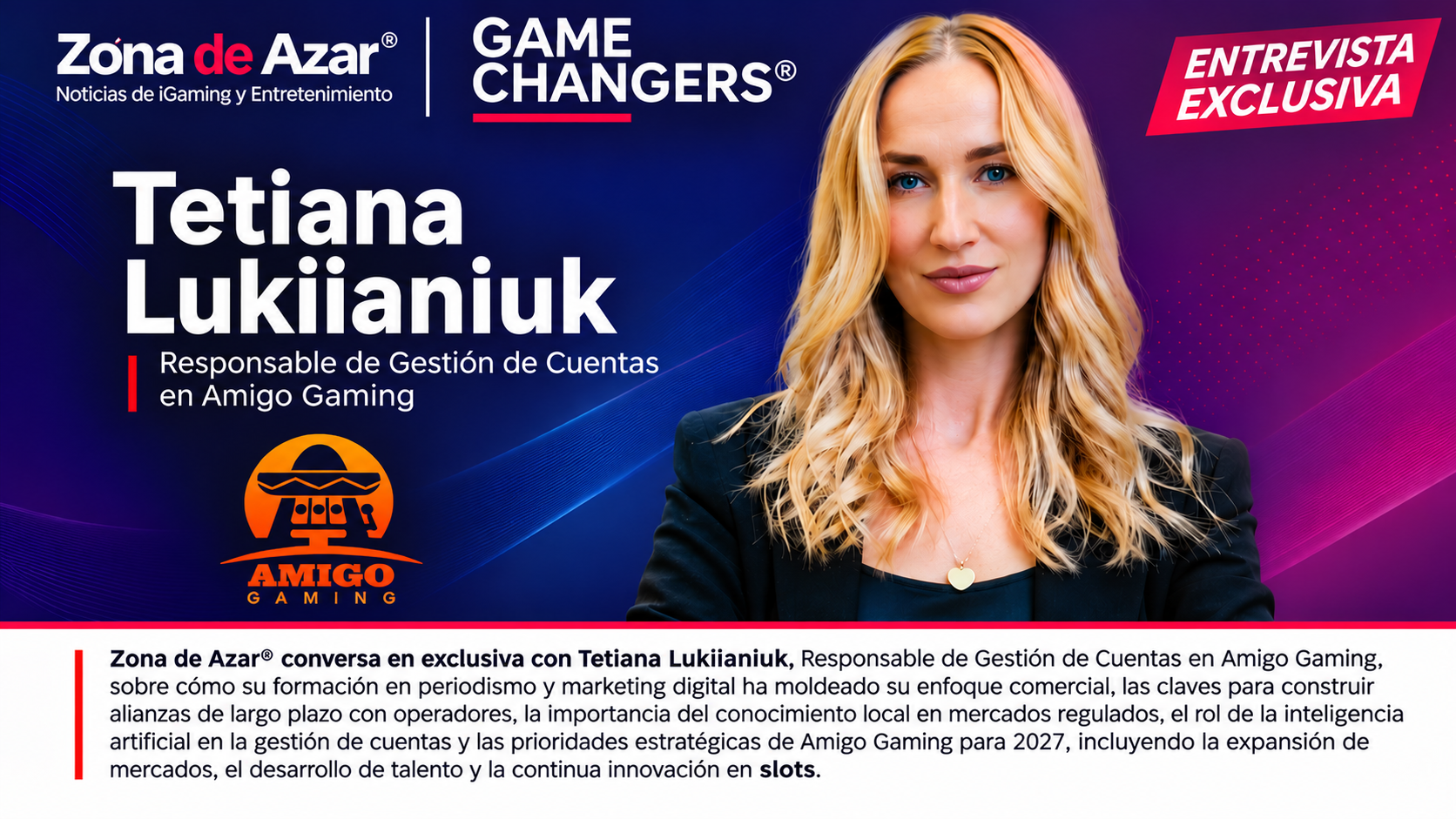
Zona de Azar – November 17, 2026 – In an exclusive interview with Zona de Azar®, Tetiana Lukiianiuk, Head of Account Management at Amigo Gaming, discusses how trust, local market expertise and cross-functional collaboration are shaping the future of iGaming partnerships.
Drawing on her background in journalism, digital marketing and commercial leadership, Lukiianiuk explains why sustainable growth requires more than short-term performance, highlighting the importance of understanding regional business cultures, aligning account management with product innovation and integrating regulatory compliance into long-term strategy.
As Amigo Gaming strengthens its presence in regulated markets across Latin America, Asia and other regions, she outlines her priorities for 2027, including expanding strategic partnerships, developing local talent, entering new markets and introducing innovative slot features and mechanics. She also explores the growing role of AI and automation in account management, while emphasizing that empathy, human judgment and meaningful relationships remain essential to lasting success.
- Your career combines journalism, digital marketing and commercial leadership. How have these different disciplines shaped the way you communicate, negotiate and build relationships in iGaming?
Before joining iGaming, I explored different professional fields, and each one gave me something I use today. Journalism taught me how to listen, ask the right questions and communicate clearly. Digital marketing helped me understand audiences and how businesses connect with them. Then I found iGaming, and it felt like the right place for me.
My years at Amigo Gaming have brought those experiences together and helped me grow them further. I’ve learned to negotiate with confidence, understand different business perspectives and build relationships that go beyond a single deal. I don’t see my earlier experience as a separate chapter; it is part of what helps me do my job today.
- How do you define a truly successful operator partnership beyond commercial performance and short-term results?
A successful partnership is built on trust, consistency and a shared commitment to growing together. Commercial results matter, of course, but they are only one part of the picture. The strongest partnerships are the ones where both sides communicate openly, understand each other’s goals and keep working together when the market changes or challenges arise.
At Amigo Gaming, we value our partners and take a long-term view. Short-term results alone cannot create lasting success. Strong collaboration can.
- As Amigo Gaming expands across regulated markets, which differences in operator expectations, player preferences and local business cultures require the greatest adaptability from your team?
Localization matters because markets differ in more than language. Players have their own preferences, operators have different expectations, and business culture shapes how people build trust and make decisions.
As we expand in regulated markets, we’re growing our team with local knowledge in mind. We have colleagues focused on Asia, representatives across Latin America and South Africa, and I’m keen to bring more local talent into the team as we develop. Understanding local traditions, communication styles and market expectations helps us serve our partners more effectively. A global strategy works best when it is informed by people who understand the local context.
- What are the most important indicators you monitor to understand the health of a strategic account, and how do you translate those insights into stronger long-term partnerships?
I look at the full picture: how the games are performing, whether launches are gaining traction, how activity changes over time, and whether the account’s priorities are being met. I also pay attention to the quality of communication. Are we speaking regularly? Are we addressing issues promptly? Do we understand what the partner wants to achieve next?
The numbers can show us where to look, but conversations help us understand why something is happening. When we bring those insights together, we can agree on practical next steps, whether that means adjusting a promotion, improving visibility or planning a launch that better fits the partner’s needs.
- You lead a growing, client-focused team. What leadership practices have proven most effective in developing talent, encouraging ownership and maintaining high standards as the business scales?
For me, good leadership starts with clarity: people need to understand their responsibilities, the team’s priorities and what good work looks like. From there, I try to give people the trust and space to take ownership, while staying available to support them and help remove obstacles.
I also believe people grow through honest feedback, shared learning and being trusted with meaningful responsibility. Our team works across different regions and cultures, so it’s important to listen and make room for different perspectives. As we scale, strong standards matter, but so does creating an environment where people feel accountable, supported and able to develop.
- In an increasingly competitive content market, how can closer collaboration between account management, product and marketing teams help shape games that genuinely respond to operator and player needs?
Account managers are close to operators and hear their feedback every day. Product teams bring the expertise to turn insights into gameplay and features, while marketing helps ensure each release is presented in a way that reaches the right audience. When these teams share information early and regularly, we can make better-informed decisions together.
It’s also important to look beyond individual requests and identify patterns across markets and partners. That helps us understand what could improve the player experience more broadly. The goal is to connect what we hear in the market with thoughtful product development and clear communication, while keeping the player experience at the centre.
- What should suppliers and operators do differently to turn regulatory complexity into an opportunity for sustainable growth?
The best approach is to treat regulation as part of the strategy from the beginning, rather than something to address at the last minute. Suppliers and operators need to communicate early, understand the requirements of each market and work closely with their compliance and technical teams.
Regulatory change can be demanding, but it can also help businesses build stronger foundations. When partners are transparent about requirements and plan together, they can make more informed decisions, create a better experience for customers and build growth that is more sustainable over time.
- With AI and automation becoming part of everyday business operations, where do you see the greatest potential to improve account management, and which aspects of client relationships should remain distinctly human?
AI and automation can give account managers more time to focus on people. They can help organize information, make reporting more efficient and highlight changes in performance that deserve attention. Used well, these tools can help teams prepare better and respond faster.
But trust is built through human interaction. Listening carefully, understanding a partner’s priorities, handling a difficult conversation with empathy and finding a solution together all require human judgment. Technology can support those moments, but the relationship itself still depends on people.
- Looking ahead to 2027, which strategic priorities would you most like to advance at Amigo Gaming in terms of partnerships, market development, team capabilities and innovation?
I’d like to keep building strong, long-term partnerships and continue developing the regulated markets where we operate, while working towards entry into new markets around the world. That means staying close to our partners, strengthening local understanding and continuing to develop our team’s capabilities as the business grows.
Innovation is another priority. We are actively implementing new features and mechanics in our slots to improve gameplay and the user experience. I’m excited by the opportunity to keep bringing together what we learn from partners, what our teams create and what players enjoy.
- What does being a Game Changer mean to you personally, and what advice would you offer to professionals aspiring to lead and make a lasting impact in the iGaming industry?
To me, being a Game Changer means being willing to keep learning, bring your whole experience with you and make a positive difference through the way you work with others. It doesn’t always mean making one dramatic move. Sometimes it means asking a better question, building trust between people or helping a team see a new possibility.
My advice is to stay curious, be reliable and treat relationships as something you build over time. Your career may take unexpected turns, but the skills and experiences you gather along the way can become your greatest strengths. Find the work that feels meaningful to you, stay open to growth, and help create opportunities for the people around you.
Edited by: @MaiaDigital www.zonadeazar.com


