Chris Kypriotis (Nike): Culture, Leadership and Belonging in Sport
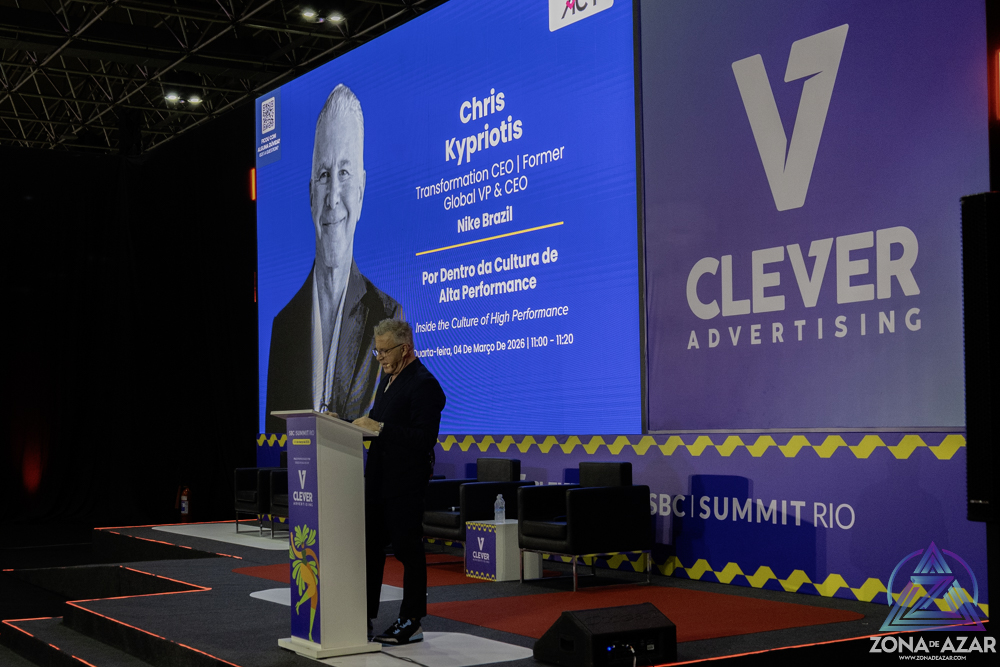
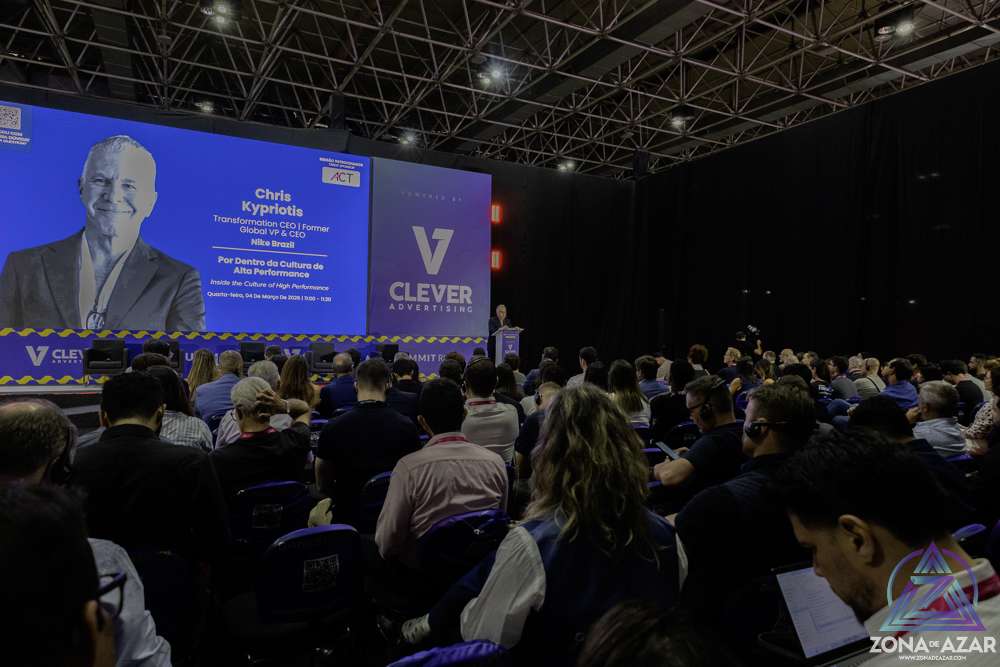
Brazil.- March o6, 2026 www.zonadeazar.com In the keynote speech ‘Inside the High Performance Culture’, held as part of the SBC Summit Rio 2026, Chris Kypriotis — Transformation CEO and former VP & CEO of Nike Brazil — shared his vision on business transformation and high performance culture.
During his presentation, the executive outlined a series of principles that have guided his career and which he considers fundamental for organisations seeking to grow in increasingly competitive environments.
Speaking to an audience connected to the sports and betting ecosystem, Kypriotis emphasised that the future of companies depends not only on innovative ideas or advanced technology, but also on organisational culture, execution capacity and leadership.
Competition will become increasingly intense
At the beginning of his speech, Kypriotis stated that the business world is experiencing a period of growing competition, in which survival does not depend solely on innovation.
‘Those who survive are not only the most intelligent operators, but the organisations that build cultures of high performance and real management,’ he said.
According to him, many companies focus on complex theories, frameworks and leadership models, when sustainable growth is based on four fundamental pillars:
- Clear direction
- High standards
- Flawless execution
- The right people on the team
‘Companies don’t scale because of smart ideas. They scale because of systems that allow them to execute those ideas,’ he explained.
Parallels between elite sport and leadership
Kypriotis also shared his experience as a professional athlete, during which time he reached number one in the ITF rankings in his category.
From this experience, he drew a parallel between high-performance sport and business leadership. According to him, elite athletes and great leaders share three main characteristics:
- Precision
- Clarity under pressure
- Obsession with execution
For the expert, these qualities are not abstract concepts, but behaviours that can be developed within organisations.
‘The difference is not in talent, but in how you act when the pressure comes,’ he said.
Nike’s focus: serving the athlete
One of the central points of the lecture was the explanation of Nike’s culture.
Kypriotis explained that the company is not organised around selling products, but rather around a clear mission: serving the athlete.
‘Everything starts with the athlete. Nike doesn’t try to sell first, it tries to serve. That difference completely changes the culture of the company,’ he said.
According to him, many companies focus on selling, while Nike seeks something different: to be chosen by the consumer.
‘Big brands don’t sell themselves. They are chosen. Consumers need to feel that the brand represents who they are.’
Belonging as a competitive advantage
For Kypriotis, the feeling of belonging has become one of the most important forces in modern business.
Instead of focusing solely on marketing or sponsorships, Nike has historically worked to create experiences that generate an emotional connection with people.
‘People don’t want to feel like they’re being sold to. They want to feel like they’re part of something.’
He also pointed out that the brand’s success at global events such as the Olympic Games or the FIFA World Cup is not based solely on sponsorships, but on the credibility built by the performance of the athletes.
‘Credibility cannot be bought. It is earned.’
Brazil and the cultural connection
During his time as president of Nike Brazil, Kypriotis led the brand at a time that included the World Cup cycle and the 2016 Rio Olympic Games.
In this context, he said he understood that Brazil is much more than just football.
‘Brazil is emotion, community, expression and pride. It’s not just about advertising in the country, but about connecting with its culture.’
According to him, brands that manage to establish an authentic connection with communities generate something more valuable than attention: trust.
‘Sponsorship buys attention. Connection builds trust.’
A reflection for the betting industry
In the final part of his talk, Kypriotis mentioned the impact that the betting industry is having on the experience of sports fans.
The executive stated that the sector is experiencing a moment of great influence, as it is transforming the way fans interact with sport. However, he warned that this power also implies responsibility.
‘Companies that focus solely on extracting value may win a few quarters, but lose decades. Those that build belonging can become permanent forces in sport.’
In conclusion, he left a message for the business leaders present:
‘The advantage does not belong to the most talented. It belongs to the best trained.’
Edited by @pererarte www.zonadeazar.com

