SBC Americas: Transforming the Identity of iGaming for the Global Stage
SBC Summit Americas 2026: The iGaming Industry Seeks to Establish Itself as a Global Entertainment Category
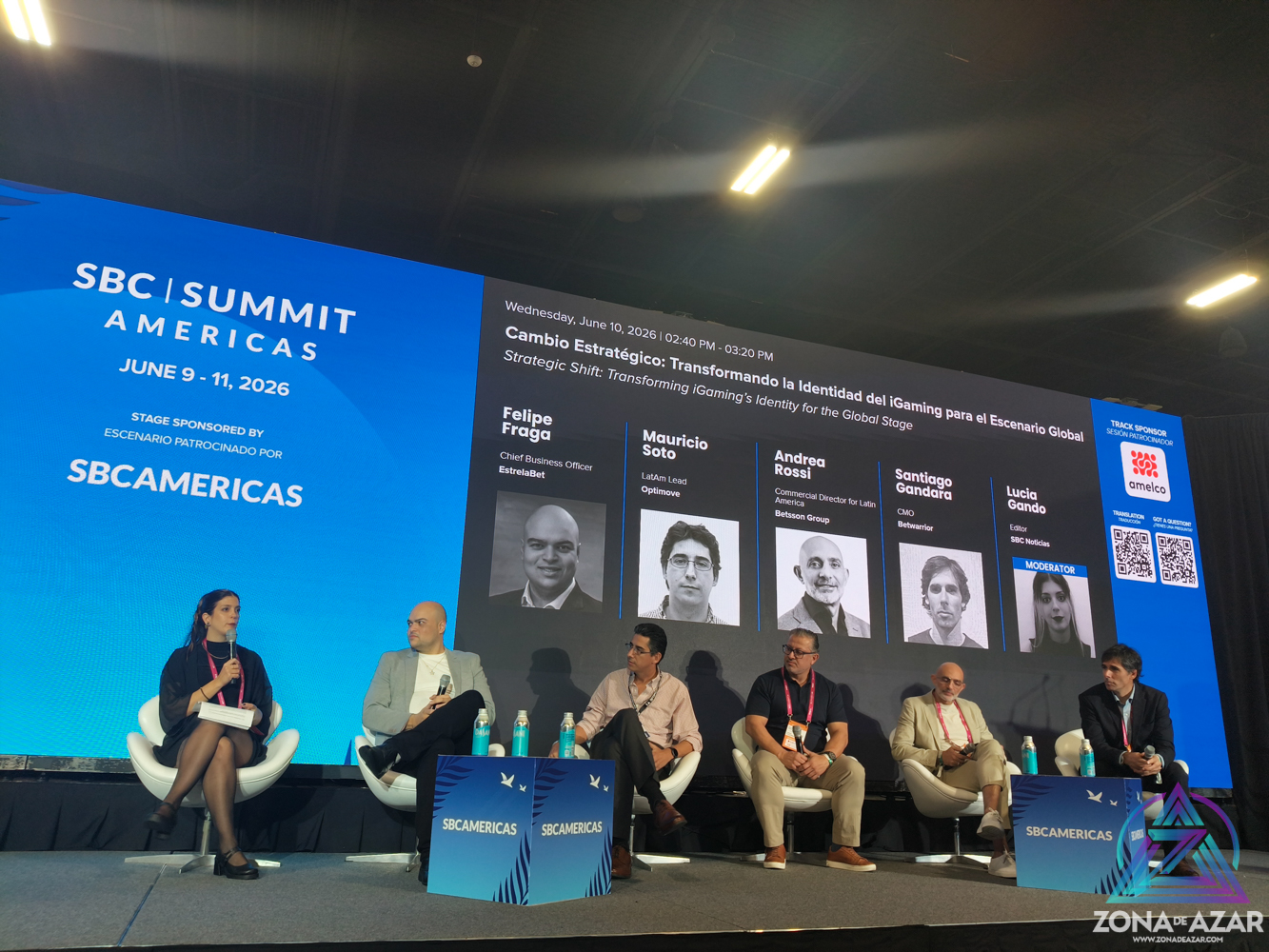
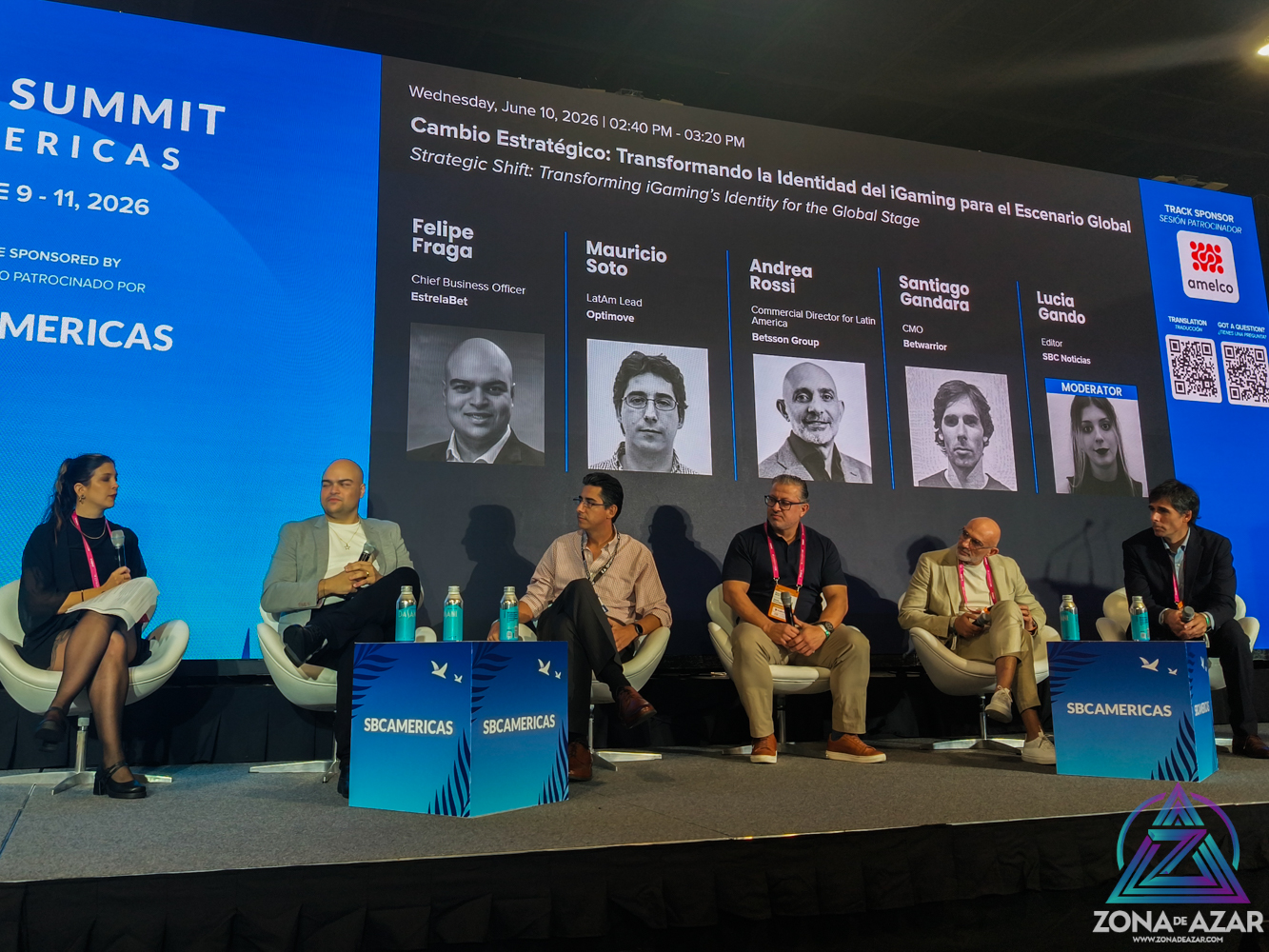
United States.- June 19, 2026 www.zonadeazar.com During SBC Summit Americas 2026, the panel “Strategic Shift: Transforming the Identity of iGaming for the Global Stage” brought together industry leaders from operations, technology, marketing, and payments to examine how online gaming is evolving from a betting-focused model into a broader digital entertainment proposition.
The session featured Felipe Fraga (EstrelaBet), Mauricio Soto (Optimove), Andrea Rossi (Betsson Group), Santiago Gandara (BetWarrior), and Fernando Garita (MWPay and Kabata Games), who agreed that competition in the sector is no longer limited to rival operators but increasingly includes streaming services, video games, and other forms of digital entertainment.
The Challenge of Competing for User Attention
Felipe Fraga highlighted how generational shifts have fundamentally changed consumer expectations. According to him, new audiences are looking for richer and more dynamic entertainment experiences, moving beyond traditional models centered solely on odds and betting markets.
In this context, he argued that online gaming operators are now competing for users’ time and attention against entertainment giants such as Netflix, Disney, and major streaming platforms, making it essential to deliver more immersive and engaging experiences.
Santiago Gandara added that the industry can draw valuable lessons from sectors such as film, television, and video gaming, particularly in content creation, engagement, and customer retention. He noted that competition is gradually shifting away from pricing and odds alone toward the overall quality of the user experience.
The 2026 World Cup as a Historic Opportunity
One of the panel’s central topics was the impact that the 2026 FIFA World Cup is expected to have on the industry.
Andrea Rossi explained that Betsson has invested heavily in strengthening its technological infrastructure and enhancing both its sportsbook and casino offerings to meet evolving market demands.
She also emphasized that online gaming has evolved from a secondary pastime into one of users’ primary entertainment channels—a trend expected to accelerate during the tournament.
Fernando Garita agreed that World Cups create unique opportunities to acquire new players and drive higher levels of activity. However, he warned that ensuring technological stability will be critical, as user traffic and transaction volumes could increase severalfold throughout the competition.
Brazil and the Impact of Regulation
Felipe Fraga also analyzed Brazil’s new regulatory environment following the implementation of the country’s regulated market.
He noted that during the 2022 FIFA World Cup in Qatar, the industry operated amid considerable regulatory uncertainty, whereas today Brazil benefits from clearer rules, stronger oversight mechanisms, and enhanced tools to combat match-fixing and promote responsible gaming.
According to Fraga, the regulated Brazilian market recorded approximately 25 million customers over the past year, reinforcing its position as one of the most significant gaming markets in the world.
He further highlighted that the timing of the 2026 World Cup will be particularly favorable for Latin American markets, as many matches are expected to take place during hours that align with users’ leisure time after work.
BetWarrior and the Experience of Supporting World Champions
Santiago Gandara reflected on BetWarrior’s experience as a sponsor of the Argentine National Team, explaining that the cycle of success that began with Argentina’s World Cup triumph in Qatar provided valuable insights into brand management, visibility, and commercial growth.
He noted that the 2026 tournament will be even larger in scale, featuring more participating teams, more matches, and an estimated global audience of around six billion viewers, requiring unprecedented levels of technological and operational preparation.
Personalization as the Key to Retention
From a marketing and analytics perspective, Mauricio Soto explained that the real challenge extends beyond attracting new users during the World Cup to ensuring they remain engaged after the tournament concludes.
Among the key performance indicators, he highlighted second-deposit rates, depth of player engagement, and advanced content personalization.
Soto stressed that operators must move away from mass, indiscriminate communications and instead focus on understanding each user’s specific interests in order to deliver relevant messages at the right moment.
He also shared findings from an Optimove study showing that 86% of Latin American bettors intend to place sports wagers during the World Cup. The research further revealed that a large majority plan to continue betting even after their favorite team has been eliminated, while more than 90% expect to remain active once the tournament has ended.
An Industry Moving Closer to Mainstream Entertainment
Throughout the discussion, the panelists agreed that the future of iGaming will depend on its ability to integrate more deeply into the global entertainment ecosystem.
The combination of technology, personalization, content, streaming, and immersive experiences is increasingly viewed as the path to attracting new generations of users while strengthening the sector’s competitive position against other forms of digital consumption.
With the 2026 World Cup acting as a major catalyst and regulated markets continuing to mature across Latin America, the industry is preparing for a new phase in which winning users’ attention may become just as important as the betting products themselves.
Edited by @pererarte www.zonadeazar.com

