Brazil: Key Successes and Mistakes in Land-Based Casinos
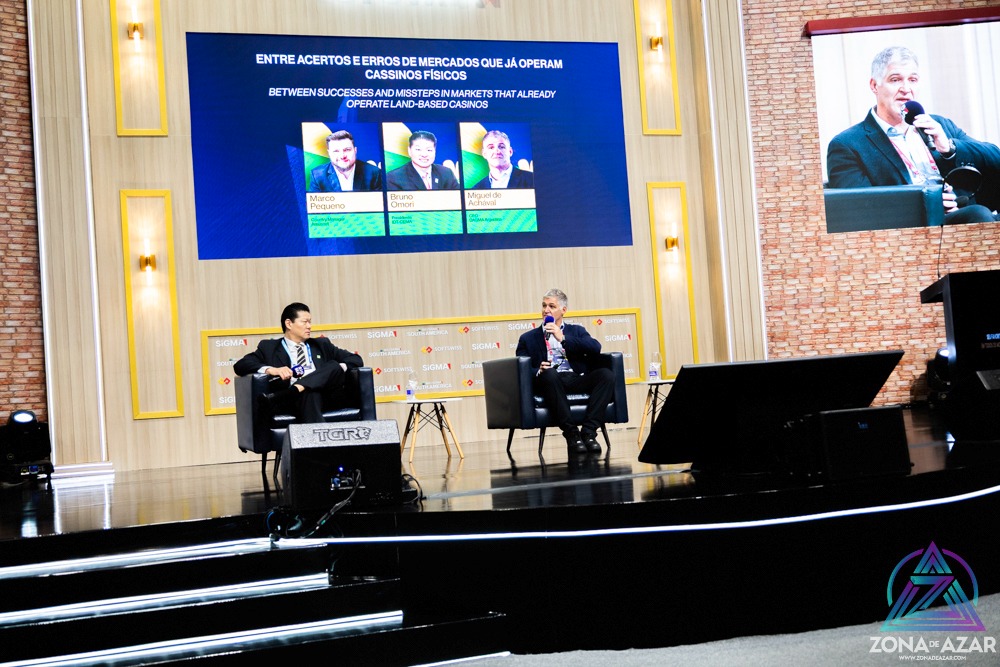
Brazil.- April 10, 2026 – www.zonadeazar.com The panel “Between Successes and Missteps in Markets That Already Operate Land-Based Casinos” brought together industry leaders to discuss how Brazil can learn from international experiences in regulating land-based gambling. With a focus on digital integration, regulatory stability, and economic impact, experts agreed on the need to avoid mistakes already made in other markets.
Overview: a unique ecosystem between physical and digital
One of the main conclusions of the panel was that online and land-based gaming should not be treated as separate industries. Miguel de Achával, CEO of DAGMA Argentina, highlighted that both are part of the same ecosystem, with a single customer at the centre.
According to him, rather than competing, both formats complement and strengthen each other. The key lies in designing regulation and operational strategy that integrate both verticals under a 360° user vision.
Smart regulation: avoiding barriers that foster illegality
Panellists warned about the risks of overly restrictive regulation. De Achával noted that imposing too many barriers can slow investment, impact profitability, and consequently encourage illegal gambling.
In this sense, they stressed that one of Brazil’s main challenges will be to find the right balance between control and development, avoiding mistakes made in other countries where overregulation weakened the formal market.
Legal stability: a key condition to attract investment
Another central point of the discussion was the importance of ensuring clear and stable rules over time. Operators agreed that land-based gaming projects require large-scale investments, making legal certainty essential to build confidence.
Frequent changes in taxes or regulatory conditions may discourage major international operators and hinder sustainable sector growth.
Economic impact: an industry that drives multiple sectors
From a macroeconomic perspective, Bruno Omori, president of IDT-CEMA, highlighted the sector’s potential to generate employment and boost multiple industries.
The development of land-based casinos involves not only gaming operations but also the activation of construction, architecture, engineering, marketing, technology, and services. This multiplier effect positions the sector as a key economic driver.
Tourism: key to generating sustained demand
Tourism was another highlighted topic. Speakers agreed that casinos can generate a steady flow of visitors, reducing dependence on occasional events such as major sports competitions or festivals.
In this context, integrating gaming with hospitality and entertainment offerings emerges as a key strategy to strengthen Brazil’s tourism positioning.
Sector formalisation: more control and higher tax revenue
Experts noted that while similar casino-like activities currently exist in Brazil, many operate under partial or non-fully regulated frameworks.
Legalisation would allow formalisation, enforce compliance standards, register employees, and ensure tax collection. It would also enable greater state control and reduce illegal gambling.
Convergence as an opportunity: the future is hybrid
In closing, Marco Pequeno, Country Manager at Amusnet, reinforced the idea of convergence between physical and digital environments. Rather than competing, both models offer different experiences that can be integrated to expand the market.
The possibility of developing hybrid offerings that combine land-based entertainment with digital tools stands out as one of the main growth opportunities for the sector in Brazil.
Future outlook: an opportunity to do things right
The panel made it clear that Brazil is at a key moment in defining the future of its land-based gaming industry.
Learning from successes and failures, designing balanced regulation, and integrating channels will be decisive factors in building a sustainable, competitive, and secure ecosystem.
Edited by: @MaiaDigital www.zonadeazar.com

