STF Keeps Minas Gerais Restrictions on Betting Advertising in Force
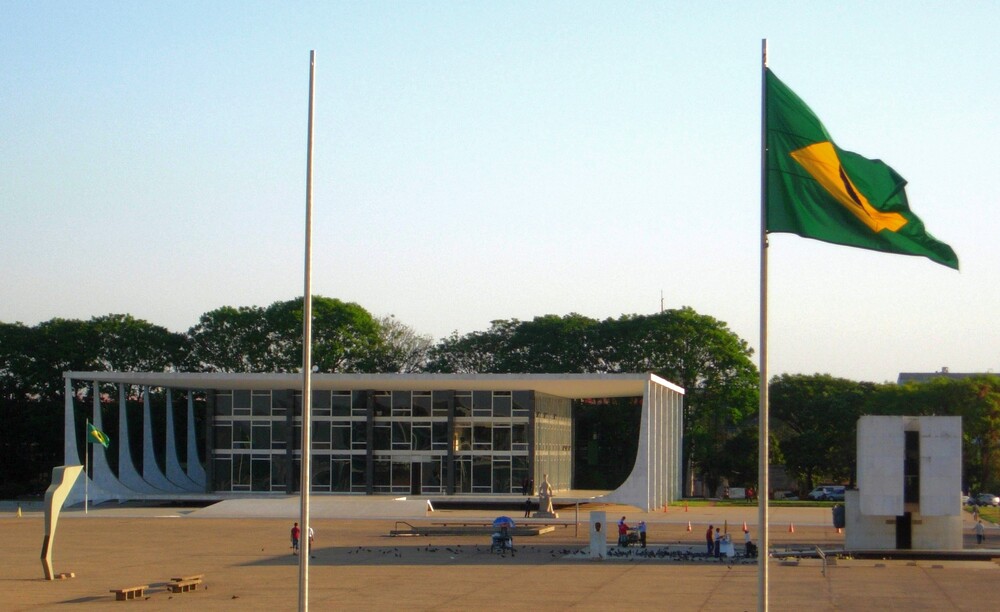
Brazil.- 23 September 2026 | www.zonadeazar.com Brazilian Supreme Court Justice Flávio Dino has rejected a request from the Associação Nacional de Jogos e Loterias, ANJL, to suspend a Minas Gerais government decree restricting fixed-odds betting advertising across state-owned spaces, assets and institutional channels.
The ruling keeps the decree in force while the constitutional dispute continues.
ANJL Challenge
ANJL had asked the Supreme Court to suspend the measure introduced by the Minas Gerais government.
The association argues that commercial advertising and lottery regulation fall primarily within federal legislative competence.
Jurisdictional Debate
A central argument is that an individual state should not create its own rules for betting advertising when the sector already operates under a federal framework.
ANJL also argues that the restrictions should have been established through legislation rather than executive decree.
Scope of the Decree
Dino concluded that the Minas Gerais measure has a narrower scope than a general advertising ban.
It applies to:
- State institutional communications.
- State-owned assets.
- Spaces under the responsibility of the Minas Gerais executive.
- Government-promoted events.
- Events supported or sponsored by the state administration.
Not a General Advertising Ban
According to Dino, the decree does not prohibit licensed operators from advertising generally across Minas Gerais.
It regulates only the use of channels and resources controlled by the state government.
State Autonomy
The justice considered the management of those assets to be part of Minas Gerais’ constitutional autonomy.
Under that reasoning, requiring the state to accept particular forms of advertising on its own assets could interfere with its ability to govern and manage its resources.
Executive Regulatory Powers
Dino also rejected, at this stage, the argument that the measure necessarily required a separate state law.
His reasoning is that the executive can determine how state-controlled assets, spaces and institutional resources are used.
Institutional Advertising
The decree particularly affects potential relationships between betting brands and state-backed initiatives.
This can include campaigns, events, physical spaces and other promotional assets linked directly to the Minas Gerais administration.
State Assets
The restrictions also apply to assets controlled by the executive branch.
Betting brands therefore remain unable to use those assets for promotional purposes where the decree applies.
Government-Supported Events
Events organised directly by the state are covered by the restrictions.
The same principle applies to events that receive government backing or support.
Public-Health Arguments
Dino also referred to risks associated with gambling where adequate controls are absent.
The ruling mentions concerns including:
- Household indebtedness.
- Loss of personal assets.
- Money laundering.
- Potential use by organised crime.
Vulnerable Consumers
The decision also links advertising restrictions with wider public-health and social-protection objectives.
Those issues form part of Brazil’s broader debate over gambling advertising and consumer exposure.
ANJL Response
ANJL said it respects the court’s ruling but disagrees with the interpretation adopted.
The association argues that the decree creates regulatory asymmetry within a sector governed nationally.
Federal Advertising Rules
ANJL maintains that commercial advertising and lottery law are matters that should remain within federal competence.
It argues that differing state-level rules could create inconsistent conditions for operators licensed under the same national system.
Interlocutory Appeal
The association said it will file an agravo regimental, an internal appeal against the single-justice ruling.
This mechanism can bring the matter before the appropriate collegiate body of the Supreme Court.
Case Remains Open
The legal dispute is therefore not over.
The current ruling leaves the Minas Gerais decree in force, but ANJL’s announced appeal could trigger further Supreme Court review.
Wider Advertising Debate
The case comes amid growing regulatory scrutiny of betting advertising in Brazil.
Congress, states, municipalities, trade bodies and self-regulatory organisations are all considering different restrictions on promotional exposure.
Federal Framework
Brazil’s fixed-odds betting market operates under federal legislation and regulation.
Licensed operators are already subject to requirements covering responsible advertising, consumer protection and commercial communications.
State and Municipal Measures
At the same time, subnational authorities are attempting to introduce additional restrictions.
That has created legal questions over how far states and municipalities can go without encroaching on federal powers.
Operator Impact
For licensed companies, the immediate consequence is that the Minas Gerais restrictions remain enforceable.
Brands must continue avoiding advertising through the state assets, spaces and institutional initiatives covered by the decree.
Sponsorship Impact
The ruling may also affect sponsorship opportunities involving events supported by the state government.
Operators will need to determine whether individual events fall within the decree’s restrictions before entering commercial arrangements.
Industry Context
Brazil is now moving through a second phase of regulation following the launch of its federal betting market.
Policy discussion is increasingly focused on advertising, responsible gambling, enforcement and limits on commercial exposure.
The Minas Gerais dispute illustrates the tension between national regulatory uniformity and state autonomy over the use of public assets and resources.
Next Steps and Impact
The next major development will be ANJL’s announced appeal.
Until the Supreme Court issues another ruling, the Minas Gerais decree remains in force.
The case could become an important precedent for determining how far other Brazilian jurisdictions may go in restricting betting advertising across publicly controlled assets, institutional channels and government-backed events.
Editó: @fonta


