SBC Summit: Pini Yakuel Presents “Positionless Marketing” in Portugal
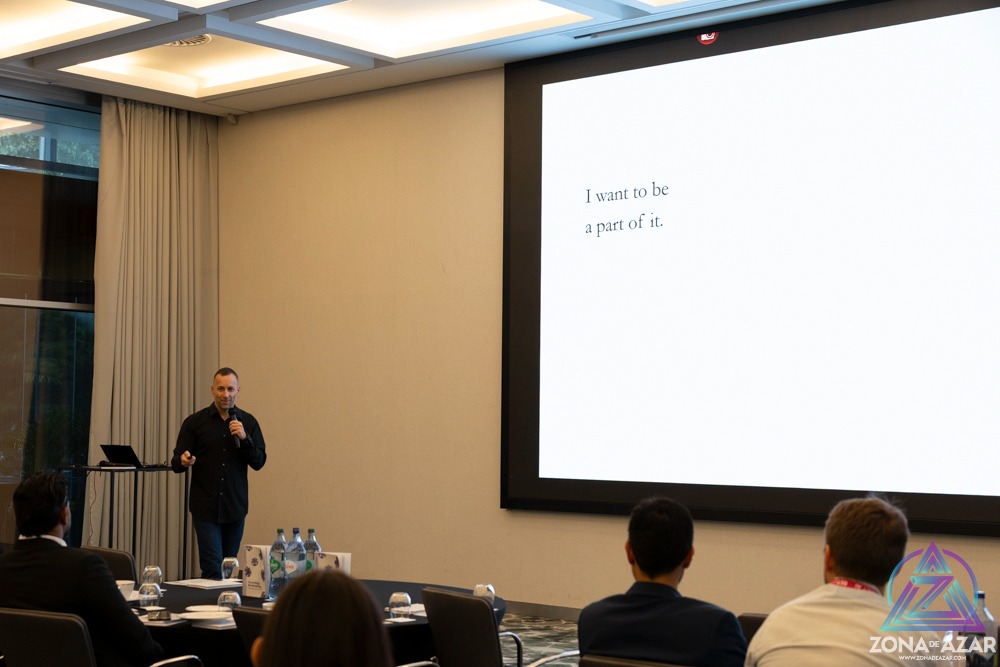
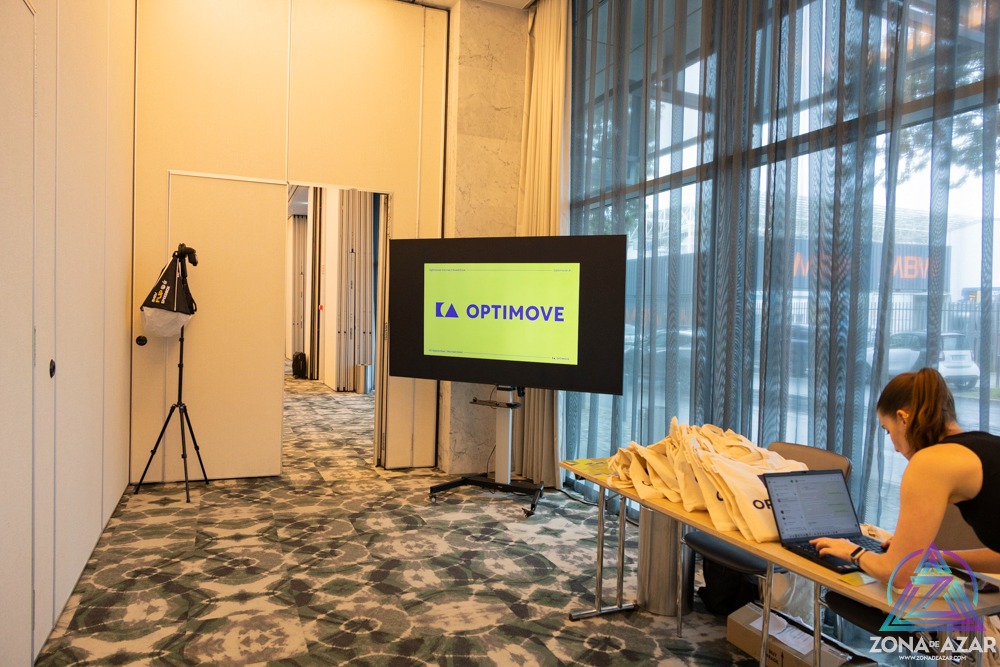
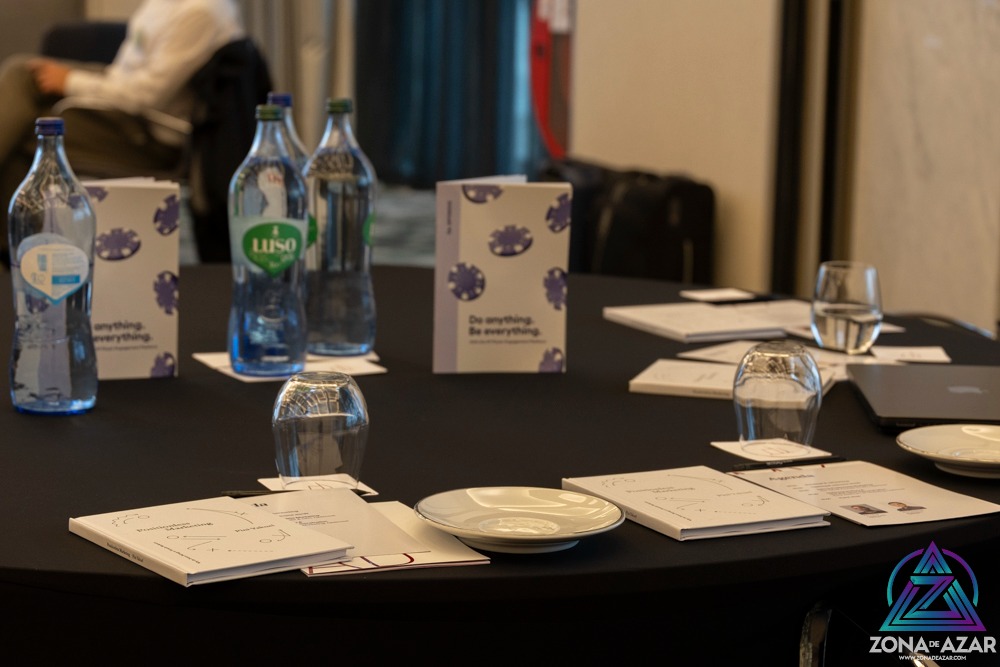
October 6, 2026 www.zonadeazar.com As part of the SBC Summit Lisbon 2026, Optimove brought together industry leaders for a special breakfast where Pini Yakuel, the company’s Founder & CEO, shared a personal and thought-provoking perspective on artificial intelligence, specialization, creativity, and the future of work.
The event, organized by Optimove during the SBC Summit—held from September 29 to October 1 at the Feira Internacional de Lisboa (FIL) and MEO Arena—served as the setting Yakuel chose to present the central ideas of his new book and reflect on a question that cuts across all industries today: What happens to human talent when artificial intelligence enables a single person to do more and more?
Far from framing AI solely as a threat to certain jobs or professions, Optimove’s Founder & CEO proposed looking at the phenomenon from a different angle: as an opportunity to reclaim the versatility that the growing specialization of work had left behind.
From basketball to business: the birth of an idea
Yakuel explained that one of the first pieces of the puzzle fell into place while he was watching the 2020 NBA Finals. After years away from basketball, he found himself watching a game that had changed radically.
Players were no longer limited to a single role: tall players were shooting three-pointers, others were distributing the ball like point guards, and traditional positions had become much more fluid. It was, he explained, the phenomenon of “positionless basketball”.
Shortly thereafter, a situation within Optimove led him to connect that transformation in sports to the business world. A client had complained that to move forward with an integration, they needed to speak with several different people, each specializing in a small part of the process and lacking a complete view of the project.
The question then began to take shape: To what extent does specialization—necessary for scaling—ultimately also lead to slowness, fragmentation, and distance?
“Rosh Gadol”: Thinking Beyond What Is Asked of Us
To explain the alternative, Yakuel drew on a concept from Israeli culture: “Rosh Gadol”, literally “big head.”
He clarified that this does not refer to ego, but rather to the ability to think beyond the assigned task. If someone is asked to solve A and B and discovers that C and D are also needed, they don’t wait for new instructions: they understand the big picture and take action.
That same logic, he explained, is present in the early years of a startup. When he founded Optimove, he himself was the CEO, salesperson, programmer, and even the website designer. The first team members also wore multiple hats.
For Yakuel, that’s part of what gives a startup its characteristic speed: fewer hand-offs, less waiting, and people capable of tackling a larger portion of the problem.
The Price of Scaling
But growth demands different rules.
Yakuel recalled his time in the United States and how that experience allowed him to understand the logic of large-scale organizations. As a system grows, he explained, its tolerance for error decreases. In response, work is divided into increasingly specific tasks, and specialists emerge who are capable of executing them with greater precision.
The result is higher quality and greater scalability, but there is a trade-off.
Upon returning to Israel around 2019–2020, after having significantly grown Optimove, Yakuel began to feel that something had been lost. The company was going through a difficult period, with slower growth and higher churn, while he felt he had become distanced from customers, employees, and the service itself.
He had built an efficient machine, but he had also lost touch with it.
From the Assembly Line to the “Artisan” of the AI Era
To explain this evolution, Yakuel went even further back in time and recalled the engineering classes he taught at Tel Aviv University.
Before the Industrial Revolution, he noted, a craftsman could master virtually the entire process of manufacturing a product. A shoemaker would select the leather, cut it, sew it, fit it, and repair it. Industrial production made it possible to manufacture on a scale and at a cost that would have been unthinkable under that model, but it did so by dividing the process among specialized workers.
And that is precisely where, according to Yakuel, artificial intelligence can bring about an unexpected shift.
Using generative AI tools, he explained, he himself began performing tasks he had previously delegated: consulting on legal matters before consulting a lawyer, writing content without necessarily relying on a copywriter, or tackling areas that had previously fallen outside his area of expertise.
The technology was expanding his scope of action.
“If a tool like this reduces friction for an individual, what can it do for a team?” was one of the questions that shaped his reflection.
What if AI doesn’t replace us, but rather expands what we can do?
Faced with the fear that artificial intelligence will eliminate professions and replace human capabilities, Yakuel offered a different perspective during the breakfast meeting.
AI could allow knowledge workers to stop functioning as specialized cogs in a large assembly line and, in a sense, become “artisans” capable of understanding, creating, and executing a larger part of the process.
From this perspective, the challenge would not necessarily lie in people’s talent, but rather in corporate structures built over decades around extreme specialization.
And that idea is already having concrete consequences within Optimove.
Yakuel explained that the company recently decided to merge its Product and Engineering organizations into a new structure based on “programs,” where team members are viewed first and foremost as builders.
This involves breaking down some of the traditional boundaries between roles: a designer can get involved in coding and take work to production, while an engineer must understand the product, interact with customers, and be able to participate in decision-making that might previously have been considered the exclusive domain of other areas.
An Optimistic Vision for the Future of Work
The talk concluded with a question that encapsulated the spirit of Pini Yakuel’s presentation:
“What if AI doesn’t push us away from our humanity, but back toward it?”
For Optimove’s Founder & CEO, artificial intelligence could open the door not only to greater productivity but also to reclaiming creativity, autonomy, and a more comprehensive view of work.
A transformation that, according to his remarks during the Optimove breakfast at SBC Summit Lisbon 2026, could paradoxically move us forward by reclaiming something that seemed to have been left behind: the ability to once again become artisans.
Source: Zona de Azar – Special Coverage from SBC Summit Lisbon 2026.
Edited by: @MaiaDigital www.zonadeazar.com


