Kangwon Land’s Non-Casino Losses Reach $1.26 Billion Through 2025
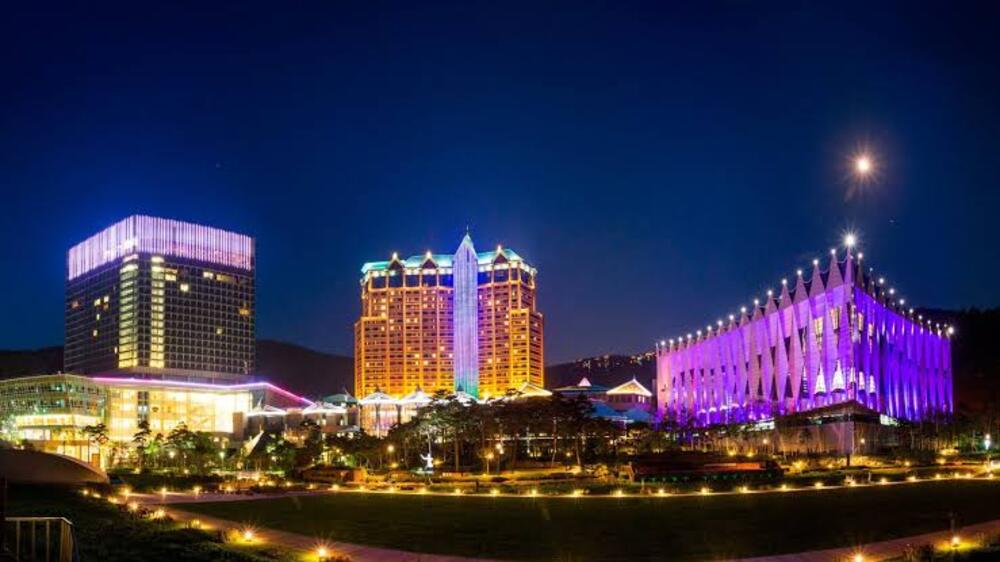
South Korea.- 14 October 2026 | www.zonadeazar.com Kangwon Land, operator of South Korea’s only casino permitted to admit domestic customers, is facing growing scrutiny over the financial performance of its non-gaming businesses.
According to information submitted to the National Assembly, seven business divisions outside the casino accumulated losses of KRW1.685 trillion ($1.26 billion) from the beginning of their respective operations through the end of 2025.
The findings raise concerns about the sustainability of the company’s diversification strategy and the allocation of profits generated by its casino operations.
Seven Divisions Accumulate Losses
The figures were submitted by Kangwon Land to lawmaker Koo Ja-keun, a member of the parliamentary committee responsible for industrial and economic affairs.
The report reveals that seven non-casino divisions recorded cumulative losses of KRW1.685 trillion.
The businesses include:
- Hotels and tourism establishments.
- Condominium complexes.
- Ski resorts.
- Water parks.
- Golf facilities.
- Slot machine manufacturing.
The operations began at different times, meaning the cumulative losses cover reporting periods of varying lengths.
Hotels and Condominiums Account for Largest Losses
Hotel and accommodation operations accounted for the largest share of the accumulated deficit.
The Grand Hotel and condominium businesses were among the principal contributors.
The development of these operations began in 2000, when the predecessor of Palace Hotel opened.
The main hotel and casino complex started operating in 2003, followed by the ski resort and first condominium facilities in 2006.
Meanwhile, Water World opened in 2018.
Annual Losses Reach $110.5 Million in 2025
During the 2025 financial year, the seven divisions recorded combined losses of KRW147.4 billion ($110.5 million).
The figure confirms that financial difficulties continue affecting Kangwon Land’s non-casino operations.
All seven divisions reported negative financial results during the year.
Even the golf course, which had previously maintained profitability, recorded a loss in 2025.
Operating Costs Significantly Exceed Revenue
An assessment by South Korea’s National Assembly Budget Office identified structural profitability problems across the businesses.
During 2025, six non-casino divisions, excluding slot machine manufacturing, recorded:
- Combined revenue: KRW183.4 billion.
- Total costs: KRW341.3 billion.
- Cost-to-revenue ratio: 1.86 times.
The differences were particularly significant at certain properties.
At Palace Hotel, costs reached 3.11 times revenue, while the ski resort recorded a ratio of 2.36 times.
Water World registered a ratio of 2.30 times, followed by the condominium business at 2.19 times.
Casino Profits Support Loss-Making Businesses
Kangwon Land was established with a mission linked to the economic development of South Korea’s former coal-mining communities.
Its exceptional authorisation to admit domestic customers to its casino was intended to generate resources supporting the revitalisation of these areas.
However, parliamentary authorities warned that a significant proportion of casino profits is being used to offset losses across other businesses.
According to the submitted figures, the casino accumulated a surplus of approximately KRW15.7245 trillion from the beginning of its operations through 2025.
The situation raises questions about the company’s ability to establish sustainable alternative sources of economic growth.
Koo Ja-keun Calls for Restructuring
Lawmaker Koo Ja-keun called for a comprehensive review of the competitiveness and operating structure of the loss-making businesses.
He argued that Kangwon Land should reduce its reliance on casino profits to sustain its other operations.
According to Koo, the company needs to establish businesses capable of generating independent returns and contributing consistently to former mining communities.
The review should consider both commercial performance and the company’s broader public mission.
K-HIT Expansion Plans $2.25 Billion Investment
Concerns also extend to Kangwon Land’s proposed K-HIT expansion project, which aims to transform the complex into an international tourism destination.
The initiative envisages investment of approximately KRW3 trillion ($2.25 billion) through 2035.
The National Assembly Budget Office warned that an expansion of this scale could increase financial pressure if existing profitability problems remain unresolved.
It therefore recommended reviewing the costs and performance of current operations before proceeding with additional investments.
Kangwon Land Defends Its Transformation Strategy
Kangwon Land maintains that it is transitioning towards a globally competitive integrated resort model.
Its strategy includes diversifying the complex through an expanded offering of:
- Shopping and retail experiences.
- Entertainment.
- Restaurants and dining.
- Wellness services.
- Tourism and recreational activities.
The objective is to attract new visitor segments while gradually reducing the company’s dependence on casino gaming.
KL Saberi Also Reports Losses
The company’s slot machine manufacturing division, KL Saberi, is also among the loss-making businesses.
Between 2020 and 2025, the operation accumulated losses of approximately KRW14.8 billion ($11.1 million).
Its international commercial performance also attracted scrutiny, particularly regarding the results of its Philippine office.
Direct machine sales in the Philippines were:
- 2024: 42 units.
- 2025: zero units.
- 2026: 6 units, according to figures available at the time of reporting.
These results prompted calls for a review of the division’s commercial effectiveness and operating structure.
Next Steps and Impact
The $1.26 billion in accumulated non-casino losses represents a significant challenge for Kangwon Land’s future development.
The company must balance its tourism diversification objectives with the need to improve the profitability of existing operations.
The K-HIT project presents an expansion opportunity but also involves substantial financial commitments through 2035.
Parliamentary authorities believe reviewing operating costs, competitiveness and commercial strategies will be essential before further investments are undertaken.
The central challenge will be transforming non-casino activities into sustainable sources of revenue, allowing casino profits to contribute more effectively to the economic development of South Korea’s former coal-mining regions.
Editó: @fonta


