DraftKings Co-Founder Says Kalshi “Cannot Compete”
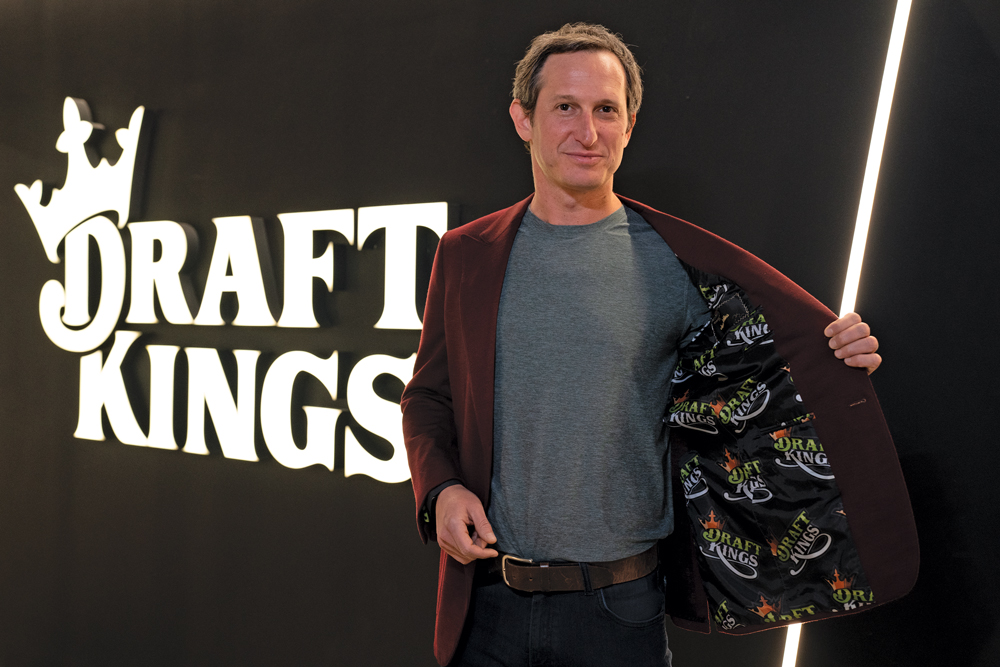
United States.– May 19, 2026 – www.zonadeazar.com The debate between traditional sportsbooks and prediction markets continues intensifying in the United States. Jason Robins, co-founder and CEO of DraftKings, argues that platforms such as Kalshi “cannot compete” with established regulated operators in terms of user experience, product depth and sports entertainment.
Overview
The rapid expansion of prediction markets in the United States is becoming one of the most important disputes within the global betting industry.
As platforms like Kalshi gain visibility by offering contracts tied to sports outcomes and real-world events, executives from traditional sportsbooks are increasingly questioning the viability of the model while raising concerns over regulatory, operational and commercial differences.
Within this context, Jason Robins stated that Kalshi currently lacks the capacity to compete directly against established operators such as DraftKings, particularly in sectors linked to mass-market sports entertainment.
Details / Context
Kalshi operates as a federally regulated prediction market under the supervision of the Commodity Futures Trading Commission (CFTC), allowing users to trade contracts tied to future events. While the platform initially focused on economic indicators and political events, the growth of sports-related activity throughout 2025 and 2026 fundamentally transformed the business.
Currently:
- more than 90% of Kalshi’s activity is sports-related,
- and approximately 89% of its revenue comes from sports markets.
The expansion of the model has generated major regulatory tensions across several US states, including:
- Arizona,
- Ohio,
- Michigan,
- Wisconsin,
- Nevada,
- and Washington,
all of which argue that sports-related event contracts effectively constitute illegal sports betting under state law.
Kalshi, however, maintains that its products are federally regulated financial derivatives rather than traditional sportsbook offerings.
Against this backdrop, DraftKings and other major operators believe prediction markets:
- face user-experience limitations,
- offer less product depth,
- lack large-scale promotional capabilities,
- and are less suited to mainstream sports entertainment.
At the same time, Kalshi continues expanding partnerships with media and digital-finance ecosystems. During 2025, the company secured agreements with:
- CNN,
- CNBC,
- and Robinhood,
seeking to integrate prediction markets into broader financial and media ecosystems.
Impact
The dispute reflects an increasingly deep structural transformation within the global betting industry:
the convergence of sports betting, fintech and financial markets.
Prediction markets are beginning to challenge the traditional sportsbook model through:
- simplified contracts,
- financial integration,
- event-based trading,
- and new hybrid digital experiences.
However, traditional operators argue that the real differentiator in sports betting remains:
- entertainment,
- live experience,
- promotions,
- gamification,
- and emotional engagement with sports.
The conflict may also redefine future regulatory boundaries in the United States, particularly regarding:
- what legally constitutes sports betting,
- which products require state licensing,
- and which powers belong to federal regulators.
Future Perspective
Tensions between traditional sportsbooks and prediction markets are likely to intensify throughout 2026, particularly with the arrival of FIFA World Cup 2026 and the continued expansion of sports betting across North America.
The US market is entering a new phase where:
- fintech platforms,
- sportsbooks,
- exchanges,
- crypto ecosystems,
- and digital media companies,
are competing to capture the same consumer through increasingly integrated experiences.
The industry’s key question no longer appears to be simply who dominates the traditional sportsbook — but which model will ultimately define the future of predictive digital entertainment.
🔗 Edited by: @_fonta www.zonadeazar.com

