New York Sues Kalshi over Alleged Illegal Gambling
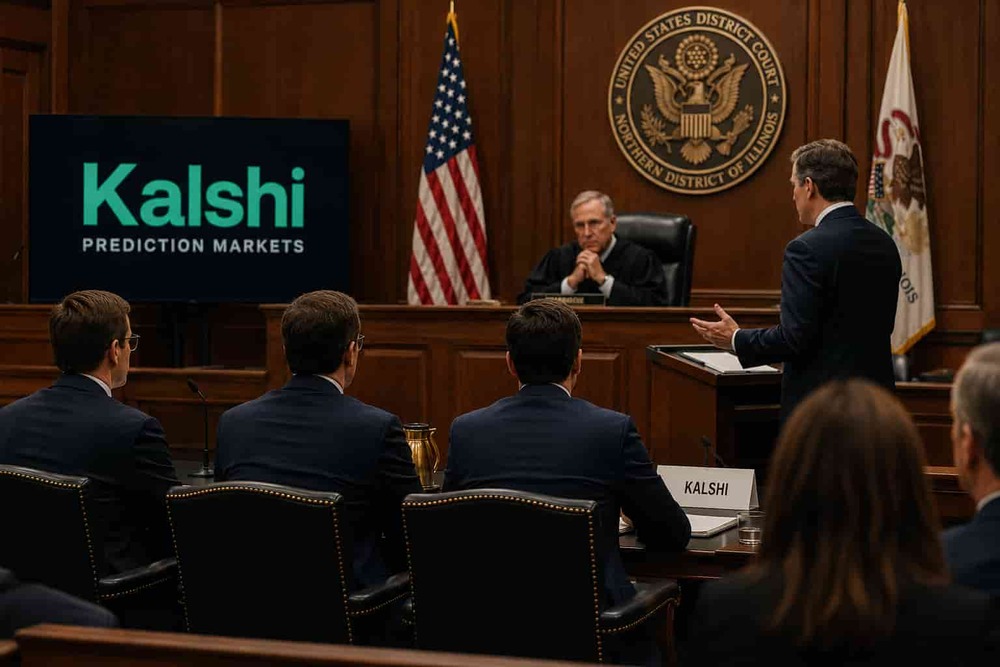
United States.- 4 August 2026 www.zonadeazar.com New York Attorney General Letitia James has filed a lawsuit against Kalshi, accusing the prediction market platform of operating an unlicensed online gambling business in breach of state law.
The action escalates the conflict between US states and federally regulated event-contract markets, which maintain that their products are financial instruments subject to the exclusive supervision of the Commodity Futures Trading Commission (CFTC).
News Details
The lawsuit was filed in the New York Supreme Court in Manhattan. It alleges that Kalshi offers contracts connected with sport, elections, culture and other events without holding a licence from the New York State Gaming Commission.
New York is seeking consumer restitution, the forfeiture of profits generated through the disputed activity and financial penalties equal to three times those profits.
State authorities argue that Kalshi’s contracts constitute gambling because participants risk money on uncertain future events that are beyond their control.
The complaint also challenges the platform’s acceptance of customers aged between 18 and 20. New York requires customers to be at least 21 years old to participate in mobile sports betting.
State Position
New York Governor Kathy Hochul said Kalshi had disregarded state gambling laws intended to protect consumers, prevent problem gambling and generate tax revenue for public services.
The state believes that allowing prediction markets to distribute sports contracts without satisfying sportsbook requirements creates a parallel market operating outside New York’s licensing, taxation and responsible-gambling framework.
The case seeks to reaffirm New York’s authority over products that function in practice as wagers on sporting results and other events, regardless of how those products are described contractually.
Kalshi’s Response
Kalshi rejected the allegations and characterised the proceedings as politically motivated.
The company maintains that it operates as a designated contract market regulated by the CFTC and that state authorities therefore lack the power to prohibit its products or apply local gambling legislation to them.
Kalshi also warned that restricting federally regulated markets could drive consumers towards offshore alternatives without comparable safeguards.
The CFTC supports a broad interpretation of its jurisdiction and has filed actions against states attempting to enforce gambling laws against federally registered platforms. The regulator argues that Congress granted it exclusive authority over contracts traded through designated markets.
Industry Context
The case forms part of an expanding legal dispute over the regulatory status of prediction markets in the United States.
More than 20 federal lawsuits are reportedly examining whether platforms such as Kalshi and Polymarket should be treated as financial exchanges under commodities legislation or as betting operators subject to state gambling laws.
New York has become at least the 14th state to take action against Kalshi or similar platforms. Arizona, Kentucky, Nevada, Ohio, Tennessee, Washington and Wisconsin are among the jurisdictions that have challenged these products over unlicensed gambling, taxation, underage participation and consumer protection.
The CFTC formally lists Kalshi as a Designated Contract Market, a status held since November 2020 and central to the company’s federal defence.
Next Steps or Impact
The New York proceedings could become one of the most significant cases in determining the boundary between federal derivatives regulation and state authority over gambling.
A state victory could require Kalshi to withdraw certain markets, introduce geographical restrictions or seek local approvals. It could also encourage similar enforcement actions elsewhere.
A ruling in Kalshi’s favour would strengthen the ability of prediction markets to distribute sports contracts nationally under a single federal framework, including in states where conventional sports betting is prohibited or governed by different requirements.
The dispute is likely to continue in the federal courts, particularly as the CFTC has demonstrated its willingness to intervene when it believes that state action interferes with its authority over registered markets.
Edited by: @_fonta


