Rony Vexelman at the SBC Summit: “Positionless Marketing” in Action
October 6, 2026 www.zonadeazar.com As part of the SBC Summit Lisbon 2026, Optimove brought together industry leaders for a special breakfast where Rony Vexelman, the company’s SVP of Marketing, demonstrated live how Optimove AI’s latest innovations aim to transform the way marketing teams work.
The event took place during the SBC Summit, held from September 29 to October 1 at the Lisbon International Fair (FIL) and the MEO Arena, and combined the strategic vision presented by Pini Yakuel, Founder & CEO of Optimove, with a hands-on demonstration led by Vexelman.

While Yakuel outlined the philosophy of “Positionless Marketing”, Vexelman took that concept directly to the practical level: How can artificial intelligence enable a marketer to expand their capabilities and accomplish more, without having to become a programmer or technical specialist?
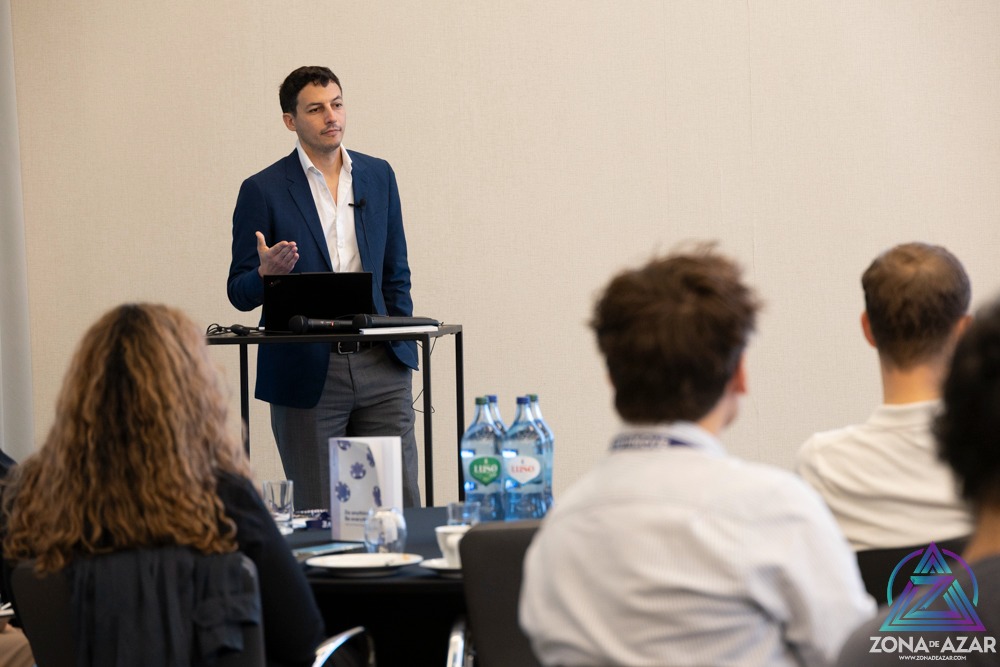
“I’m a marketer, not a technical person,” he explained at the start of the presentation, before demonstrating in real time how Optimove’s AI Suite enables users to work with data, create campaigns, generate content, automate tasks, and make decisions through conversational interfaces.
An AI Suite Designed for How Marketers Work
Vexelman explained that the way, the place, and the tools marketers use have changed dramatically, even over the past six months.
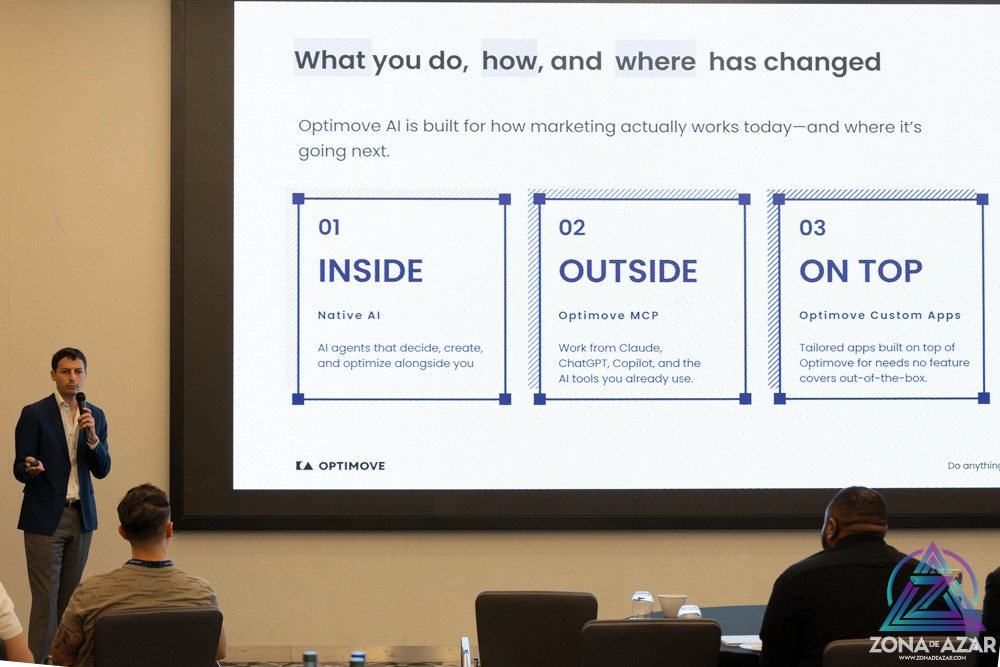
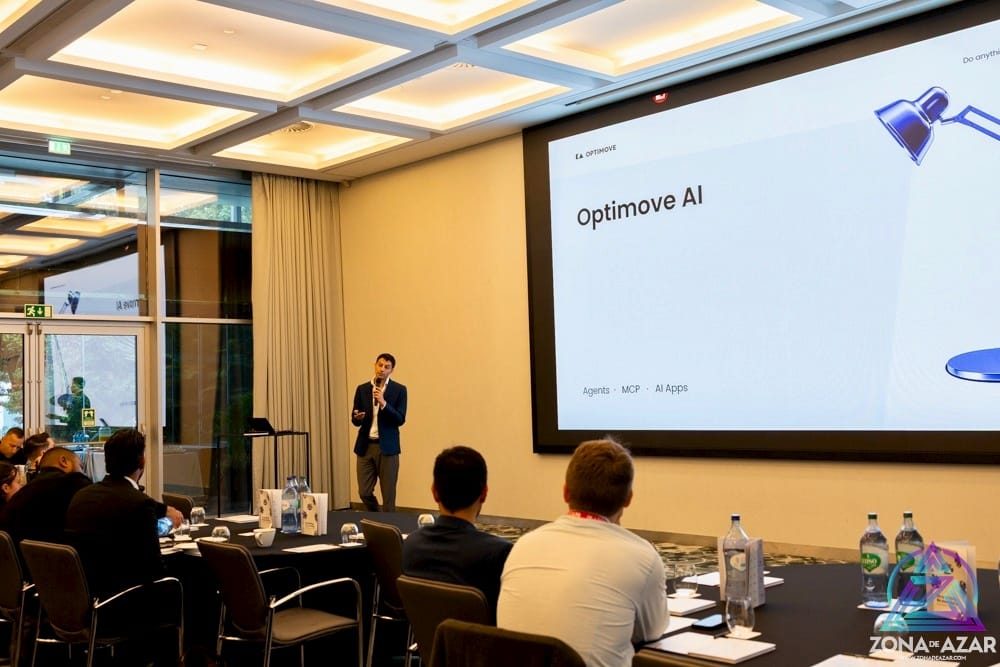
To respond to this transformation, Optimove structures its AI capabilities around three dimensions: Inside, Outside, and On Top.
“Inside” brings together the native agents that reside within Optimove and assist with insights, creation, and optimization. “Outside” relies on Optimove’s MCP to connect the platform with external tools such as ChatGPT, Claude, and Copilot. And “On Top” enables the development of specific AI-assisted applications tailored to each client’s unique needs.
The goal behind this architecture is to allow marketers to use artificial intelligence within their usual workflow, rather than having to adapt to a completely different environment.
From Understanding What’s Happening to Deciding What to Do
Within Optimove, Vexelman identified different layers of agents.
The first layer is focused on insights. This includes capabilities that provide proactive recommendations and tools like Content Intelligence, which analyzes and tags submitted content based on elements such as tone of voice, promotions, or images.
He also previewed a Campaign QA agent designed to review campaigns, detect potential issues, and help users correct them.
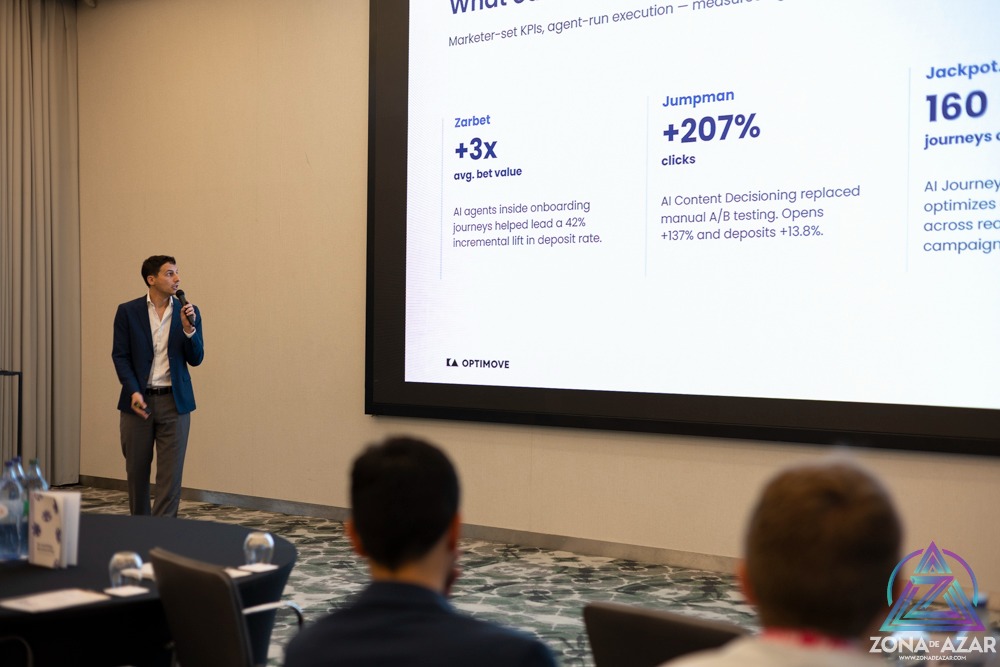
But one of the central points of the presentation was the decisioning layer: agents capable of operating within user-defined limits and deciding on the best campaign, offer, content, or send time for each customer.
Vexelman also showed examples of how these capabilities are used in iGaming, including journey personalization, dynamic content selection, and decisions applied to multiple player journeys.
Optimove Beyond Optimove
One of the most practical moments of the presentation came when Vexelman moved from the slides to a live demonstration.
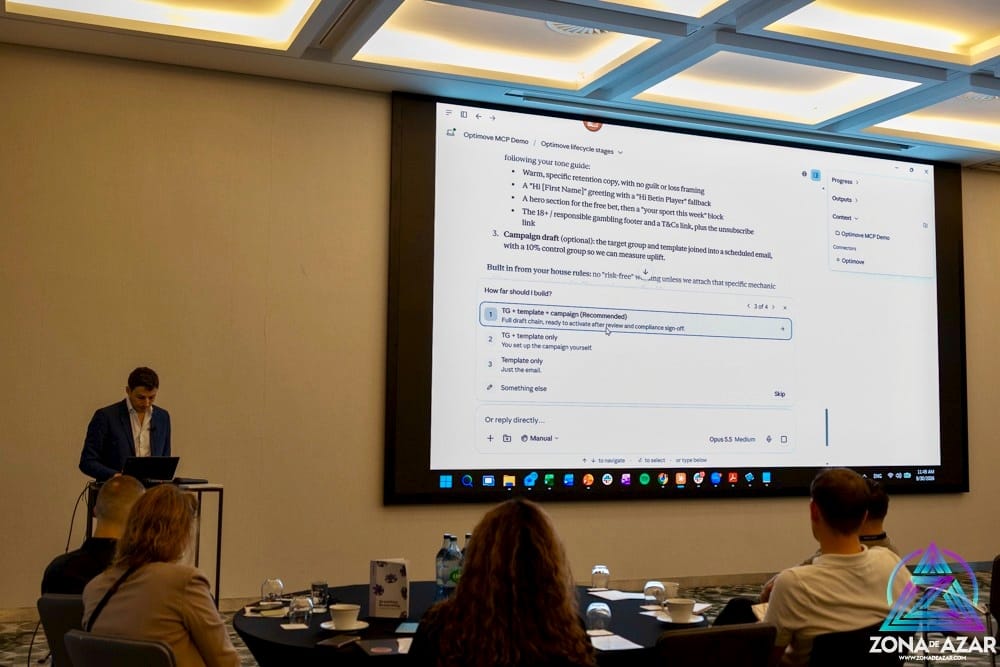
Using Optimove’s MCP, he showed how a marketer can interact with platform data from an external AI tool using natural language.
Instead of writing code or SQL queries, he began by asking directly about the different stages of the customer lifecycle and then delved deeper into active players based on their churn risk.
From there, the conversation evolved: the AI analyzed preferences within that segment, searched for relevant information to design an action, and moved toward creating a campaign.
The demonstration aimed to convey a clear idea: marketers can move from a question to an insight and from that insight to an action without ever leaving a natural-language conversation.
AI helps, but marketers retain control
According to the approach presented by Optimove, the autonomy of agents does not mean giving them absolute control.
During the demo, Vexelman explained that elements created using AI are initially generated as drafts so that a person can review and approve the result before it is executed.
“We want our agents to assist throughout the journey and not execute anything until you’ve approved the result,” he explained during the presentation.
This human-in-the-loop logic came up several times during the demonstration, when the system requested permission before making certain changes.
A Single “Brain” for the Entire Team
Vexelman also showed how shared projects can provide a common context for teams.
Instead of each team member having isolated conversations with an AI tool, a project can incorporate information in advance—such as tone of voice, brand guidelines, colors, fonts, glossaries, KPIs, and strategic briefings.
This way, different team members can work within the same context and share the same knowledge base, producing results that are more aligned with the organization’s strategy.
From Slack to Excel and Asana: Automating Day-to-Day Work
The demonstration then moved on to interoperability.
Vexelman showed examples where AI can automatically review upcoming Premier League matches, suggest ideas for mini-games, and send recommendations to Slack. He also demonstrated how the system can analyze campaigns and flag those whose performance warrants review.
Other examples included automatically updating Excel trackers with campaign metrics and creating tasks in Asana so team members can review campaigns before launch when potential issues are detected.
The idea goes to the heart of “Positionless Marketing”: breaking down barriers between tools, data, and functions so that one person can handle a much larger portion of the process.
OptiGenie and a New Way to Create Campaigns
Another highlight of the demonstration was OptiGenie, Optimove’s agent.
Vexelman showed how a previously created piece could continue to be edited within Optimove using conversational instructions, without the need to master traditional editing tools.
The process could then progress toward the creation of a complete campaign, keeping the user involved in the decisions and allowing them to review the audience, dates, frequency, and other parameters before activating it.
The Real Differentiator: Decisioning
To wrap up, Vexelman returned to a point he considers central.
In a landscape where an increasing number of providers can showcase AI-powered chats, agents, and tools capable of generating content, the differentiation wouldn’t simply lie in creating an email or a campaign with artificial intelligence.
It would lie in making better decisions.
When should a message be sent? What offer should each customer receive? What content is most appropriate? What journey corresponds to each customer?
Vexelman noted that it is in these micro-decisions where Optimove seeks to differentiate itself, relying on unified data, predictive analytics, scientific measurement, and multichannel execution.
From Concept to Execution
Rony Vexelman’s presentation served as a practical continuation of the vision outlined by Pini Yakuel during the Optimove breakfast.
If “Positionless Marketing” calls for professionals capable of transcending the traditional boundaries of their roles, Optimove’s AI Suite aims to provide them with the tools to do so.
Fewer barriers between creativity, data, analysis, and execution; greater capacity for each marketer to understand, create, decide, and act.
As Vexelman summarized at the end of his presentation, the goal is to enable Optimove’s teams and clients to become, in their own right, true “positionless marketers.”
Source: Zona de Azar – Special Coverage from SBC Summit Lisbon 2026.
Edited by: @MaiaDigital www.zonadeazar.com


