Prediction Markets, Politics and Sports Betting Converge
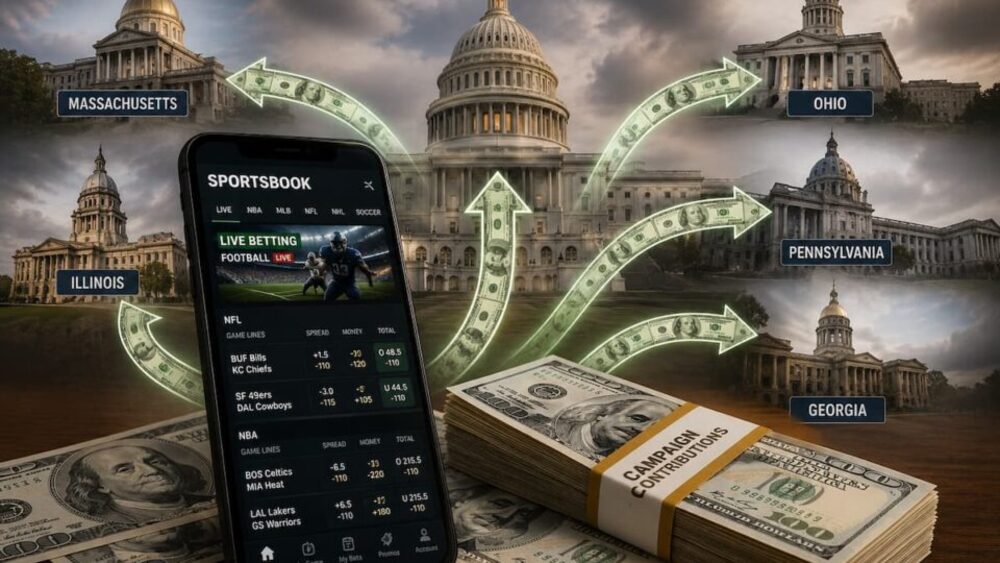
United States – June 2, 2026 – www.zonadeazar.com Prediction markets are rapidly moving toward the centre of the American financial, political and sports betting ecosystem. A new Gambling Insider analysis highlights how platforms such as Kalshi and Polymarket are no longer competing only with traditional sportsbooks, but are increasingly influencing political campaigns, federal regulation and new forms of event-based economic participation.
Overview
The prediction market sector has accelerated dramatically following its growing role during US presidential elections and the expansion of contracts tied to sports, economics, politics and global events.
What was once considered a niche financial segment is now emerging as one of the most disruptive sectors at the intersection of fintech, sports betting, AI and predictive analytics.
Sportsbooks Face a New Challenger
Traditional betting operators increasingly view prediction markets as a direct competitive threat.
While sportsbooks operate under state gaming licences, platforms such as Kalshi argue that their contracts are federally regulated financial instruments supervised by the Commodity Futures Trading Commission (CFTC), creating growing regulatory tensions.
The central debate remains whether trading on the outcome of a sporting event through financial contracts constitutes investing or gambling.
Political Influence and Election Markets
Prediction markets have also become increasingly influential within American politics.
The platforms played a major role during the 2024 presidential election cycle and continue to be viewed as alternative indicators of political sentiment and voter expectations.
Analysts argue that prediction markets now function as parallel forecasting systems capable of shaping public narratives and influencing investor behaviour.
Regulatory Pressure Expands
Regulatory scrutiny continues intensifying both inside and outside the United States.
Spain recently blocked access to Kalshi and Polymarket while investigating potential licensing violations. Similar restrictions already exist in several European jurisdictions.
Meanwhile, multiple US states continue pursuing legal and regulatory actions against prediction market operators.
Integrity and Insider Trading Concerns
As market volumes grow, concerns surrounding integrity and market abuse continue increasing.
Recent investigations and academic research have raised questions involving insider trading, privileged information, manipulation risks and regulatory vulnerabilities.
Industry experts argue that future growth will depend heavily on the development of effective oversight systems capable of balancing innovation and market integrity.
An Industry Seeking to Transform Finance
Several industry forecasts suggest prediction markets could process more than US$1.3 trillion in annual trading volume over the coming years, positioning themselves as a hybrid category between betting, financial derivatives and information markets.
The entrance of major financial institutions, AI-driven liquidity tools and automated market-making systems is accelerating that transformation.
Future Outlook
The core debate is no longer whether prediction markets resemble gambling or finance.
The larger question is how they will coexist with sportsbooks, futures exchanges, regulators and consumer protection frameworks.
Regulatory decisions expected throughout 2026 may establish the long-term framework for an industry seeking to redefine how people speculate, invest and forecast future events.
🔗 Edited by: @_fonta www.zonadeazar.com

